Conditions Evaluated
Low Back Pain
Evaluation.
Low back pain is one of the most common pain complaints and can arise from multiple spinal structures. Dr. Dardashti evaluates low back pain in the context of the patient's symptoms, physical examination, imaging when available, prior treatment response, and functional goals.
In Brief
Multiple Possible Sources
Low back pain can arise from discs, facet joints, sacroiliac joints, spinal nerves, muscles, or other structures. Identifying the likely contributor is central to evaluation.
Individualized Evaluation
Evaluation includes a detailed history, physical and neurologic examination, and review of imaging when available. Findings are interpreted in the context of the patient's symptoms.
Range of Treatment Options
Treatment may include conservative care, medication management when appropriate, or image-guided procedures for selected patients based on the clinical picture.
Overview
What Is Low Back Pain?
Low back pain refers to pain in the lumbar region, below the rib cage and above the gluteal area. It is one of the most common pain complaints and can vary widely in character, severity, and duration — from acute episodes to persistent or chronic conditions.
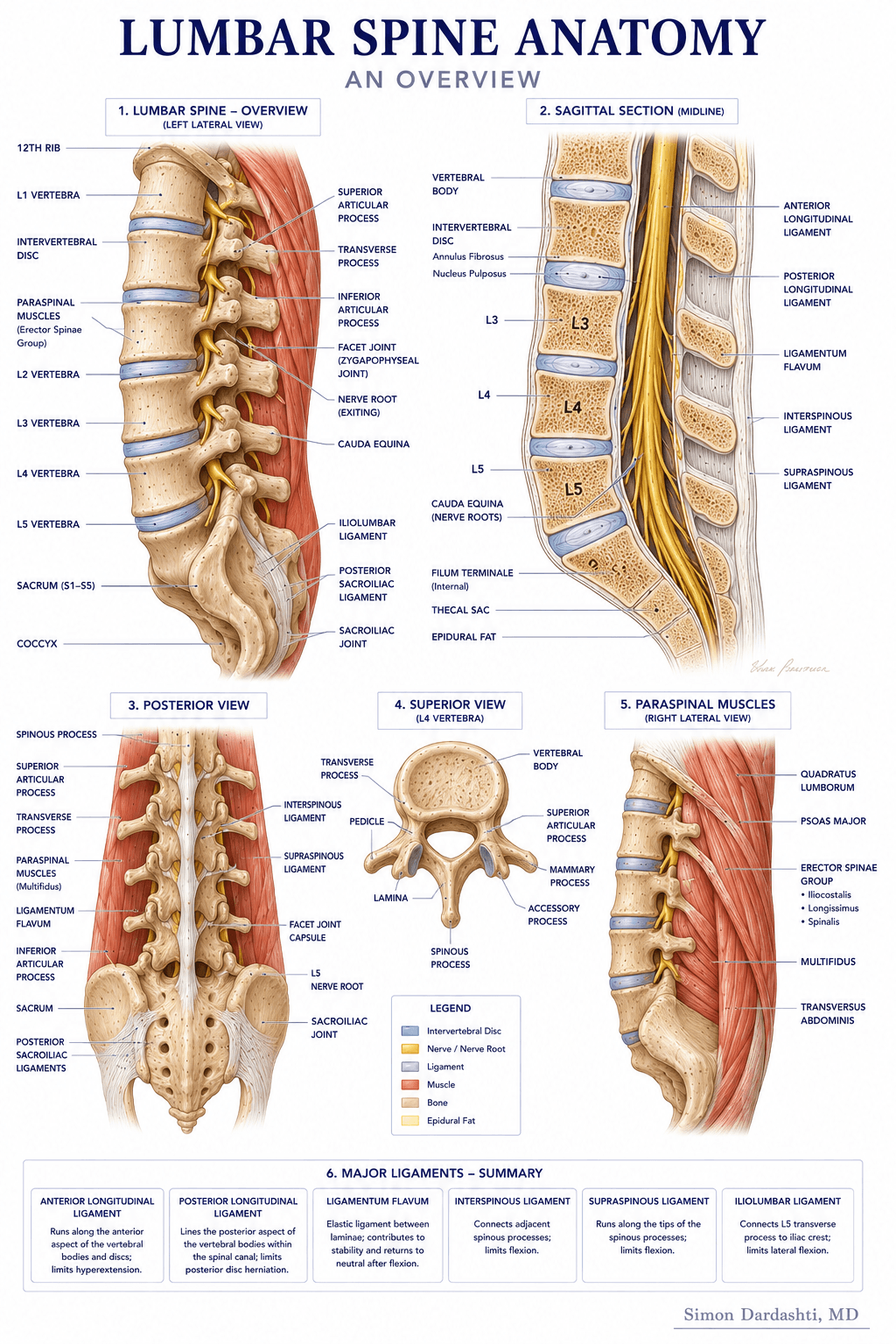
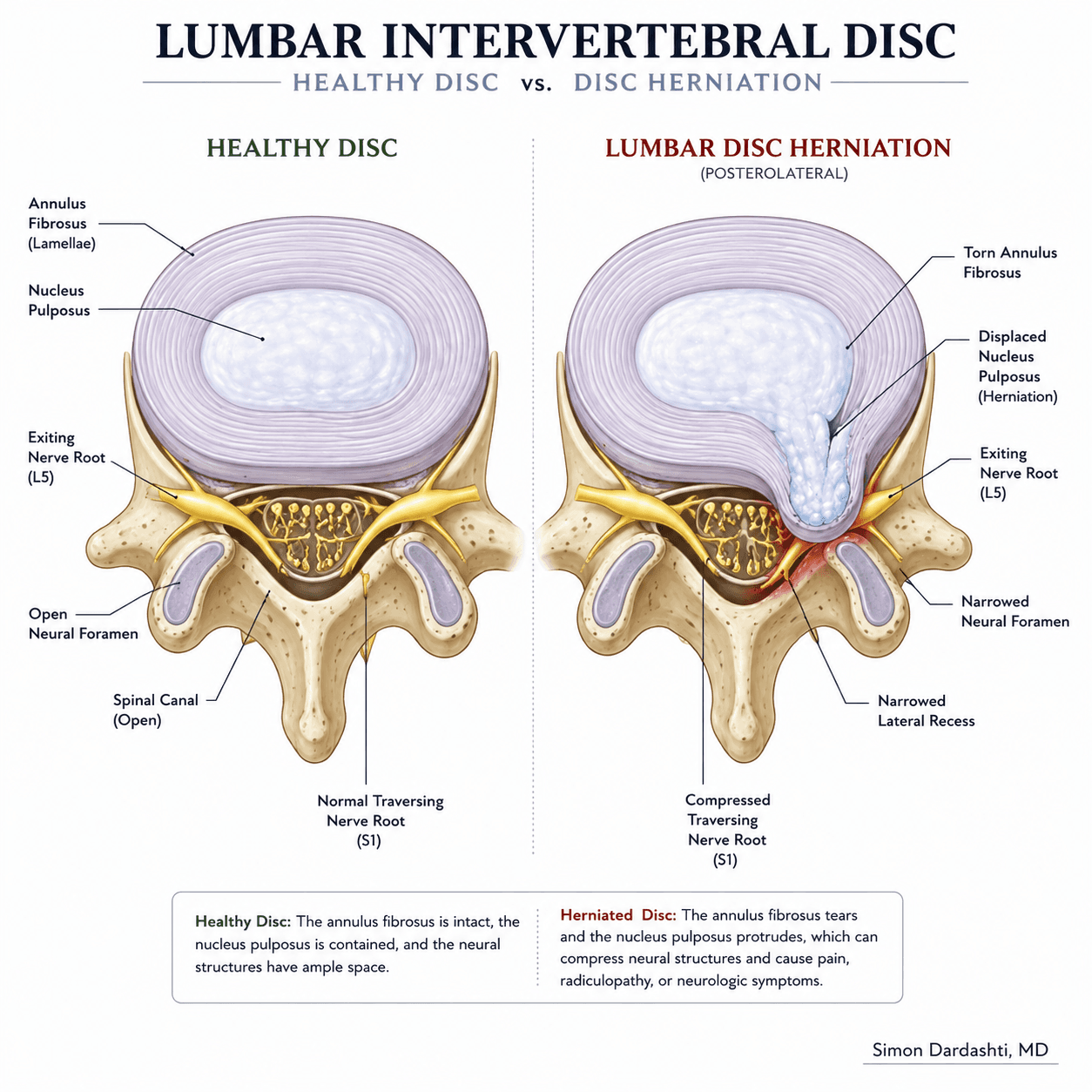
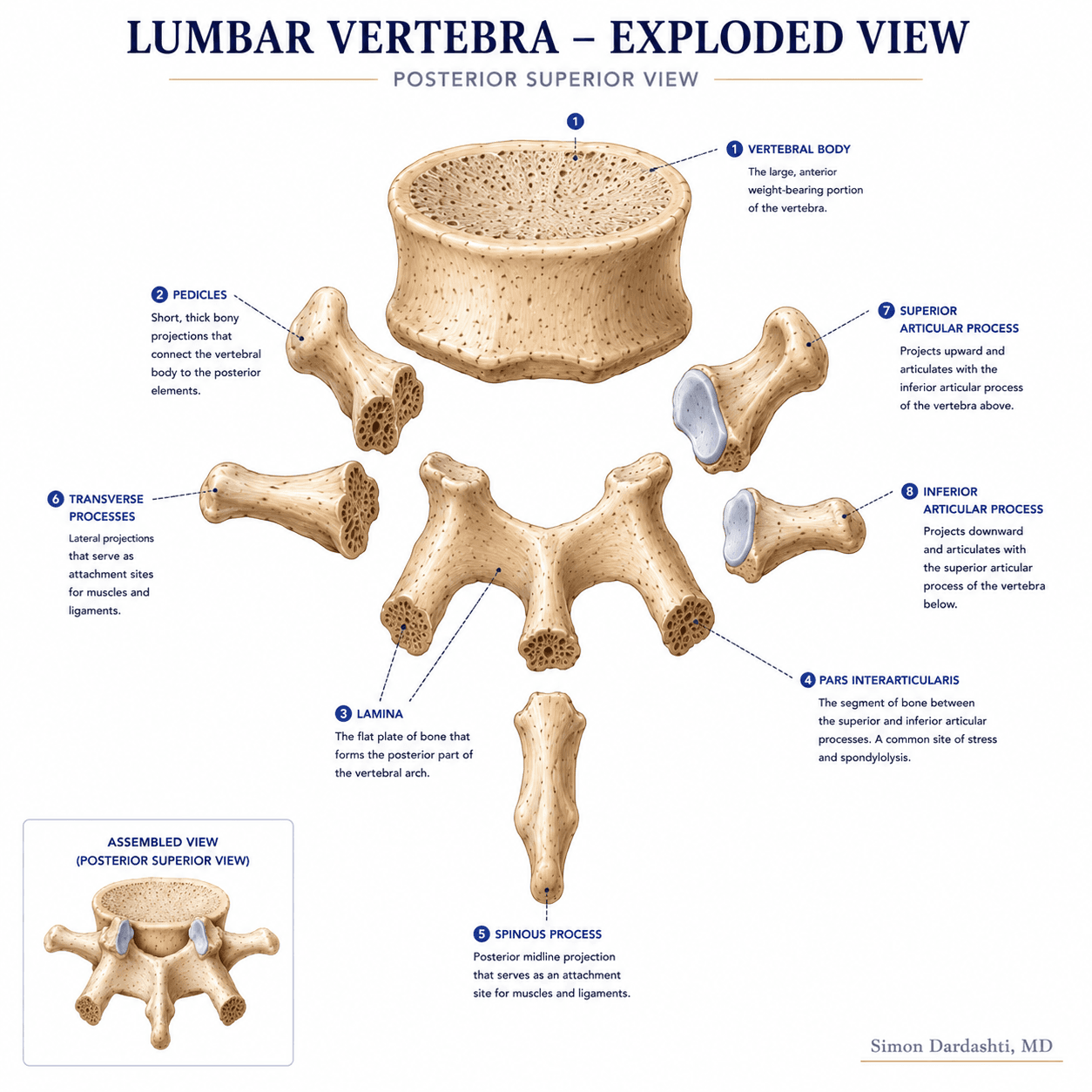
The low back is a complex structure, and pain can arise from multiple sources including intervertebral discs, facet joints, sacroiliac joints, spinal nerve roots, muscles, and ligaments. In some cases, more than one structure may be contributing. Identifying the likely pain generators is an important part of clinical evaluation and guides treatment planning.
Evaluation
Common Reasons for Evaluation.
Patients are commonly referred or present for evaluation due to:
- Low back pain that has not improved with initial or conservative treatment
- Low back pain associated with radiating leg pain, numbness, or weakness
- Low back pain following an injury, accident, or significant change in activity
- Low back pain that limits daily function, activity, or quality of life
- Low back pain with imaging findings that have not been correlated to a treatment plan
- Persistent low back pain after prior procedures or treatments
Approach
How Dr. Dardashti Evaluates Low Back Pain.
Evaluation begins with a detailed clinical history, including the character, location, onset, and pattern of pain; aggravating and relieving factors; prior treatments and their responses; and the patient's functional status and goals.
A physical and neurologic examination helps assess the likely contributing structures and rule out findings that may require urgent attention. When imaging is available — such as MRI, CT, or X-ray — findings are reviewed in the context of the patient's symptoms. Imaging findings alone do not always determine the appropriate treatment.
The goal of evaluation is to identify the most likely pain generators and develop a treatment plan tailored to the individual patient's clinical presentation, prior treatment history, and functional goals.
Treatment
Treatment Options That May Be Considered.
Treatment is individualized based on the clinical evaluation. Depending on the suspected pain source, options that may be considered include:
- Physical therapy coordination
- Medication management when clinically appropriate
- Epidural steroid injections for radicular or nerve-related symptoms
- Facet joint injections or medial branch blocks for suspected facet-mediated pain
- Sacroiliac joint injections when sacroiliac joint involvement is suspected
- Radiofrequency ablation for selected patients who respond to diagnostic blocks
- Spinal cord stimulation evaluation for appropriate candidates with chronic pain
- Multimodal pain management planning based on overall clinical context
Not every patient requires an interventional procedure. Treatment recommendations are based on the individual patient's diagnosis, history, examination findings, prior treatment response, and goals.
Limitations
Important Limitations.
Low back pain evaluation and treatment is complex. Not all low back pain has a clearly identifiable structural source, and response to treatment varies among patients.
No treatment can be guaranteed to provide relief. A formal clinical evaluation is required to determine appropriate treatment for any individual patient. This page is for general informational purposes only and does not constitute medical advice or create a physician-patient relationship.
Dr. Dardashti sees patients in Mission Hills, California, serving patients from the San Fernando Valley, Santa Clarita Valley, and surrounding Los Angeles communities.
Reading
Recommended Reading.
Understanding your diagnosis and available options can help you prepare for your consultation and make informed decisions about your care.
Related
Related Conditions & Procedures.
Medically Reviewed by Simon Dardashti, MD, MS·Board-Certified, Pain Medicine & Anesthesiology
Last Reviewed: July 2026