Conditions Evaluated
Sacroiliac Joint Pain
Evaluation.
The sacroiliac joint can be a source of low back, buttock, or posterior pelvic pain. Because symptoms can overlap with other conditions, careful clinical evaluation is required to identify sacroiliac joint involvement as a likely contributor to pain.
In Brief
Overlapping Symptoms
Sacroiliac joint pain can mimic lumbar spine, hip, or muscular pain. Careful clinical evaluation is important because symptoms alone are not sufficient to confirm the diagnosis.
Provocative Testing
Physical examination maneuvers that stress the sacroiliac joint help identify it as a potential pain source, though no single test is definitive.
Injection Options
Sacroiliac joint injections may be considered for selected patients when clinical evaluation supports sacroiliac joint involvement as a significant contributor to pain.
Overview
What Is Sacroiliac Joint Pain?
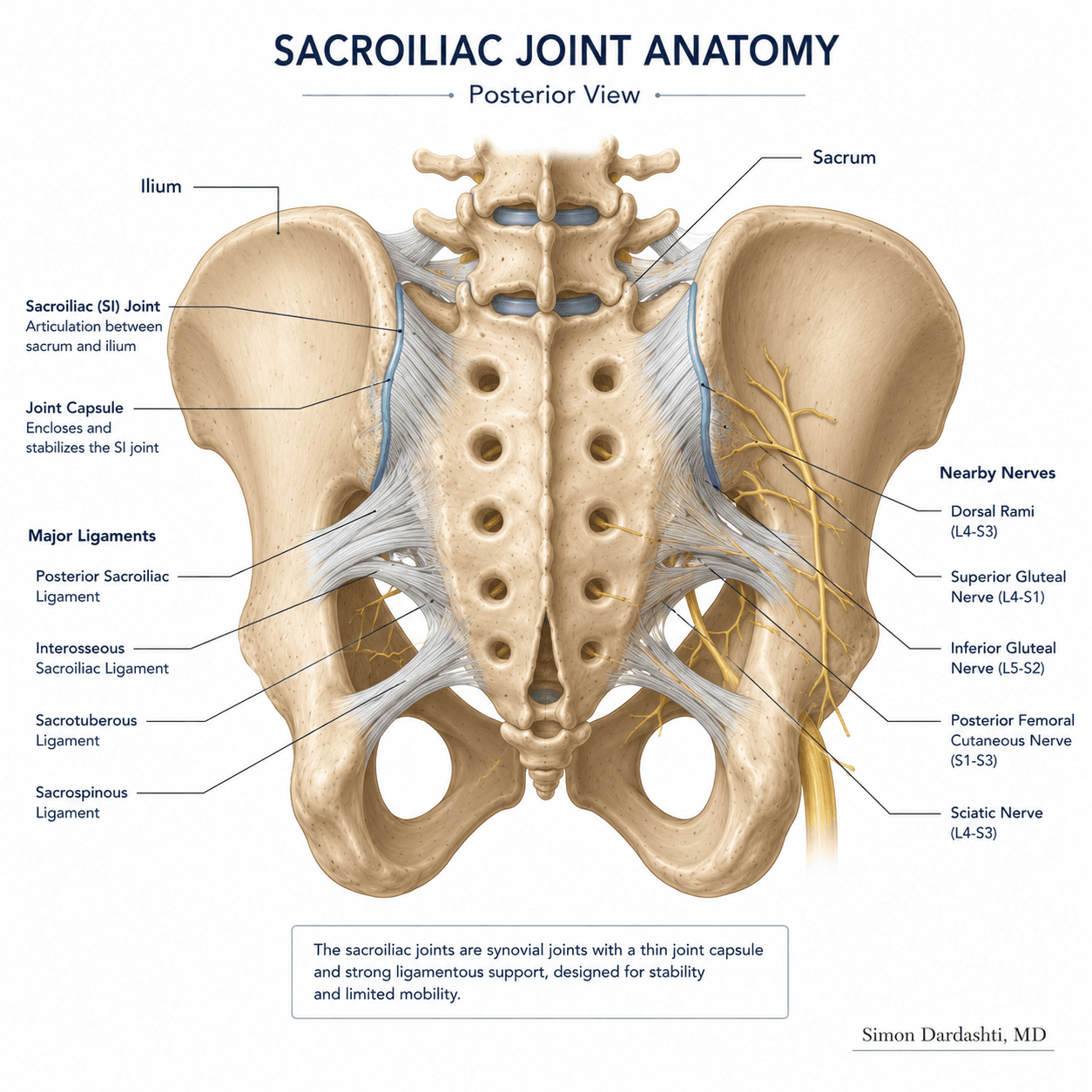
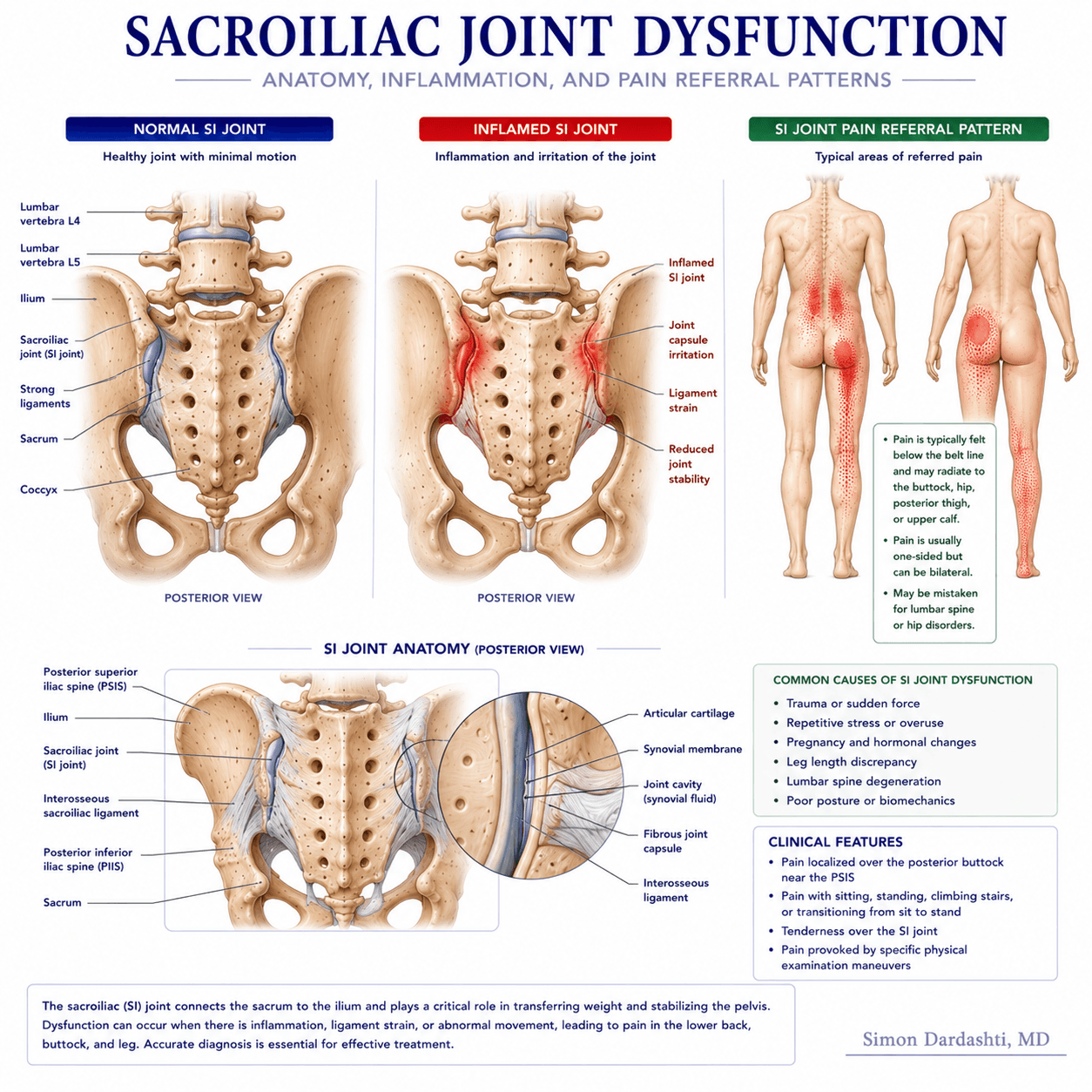
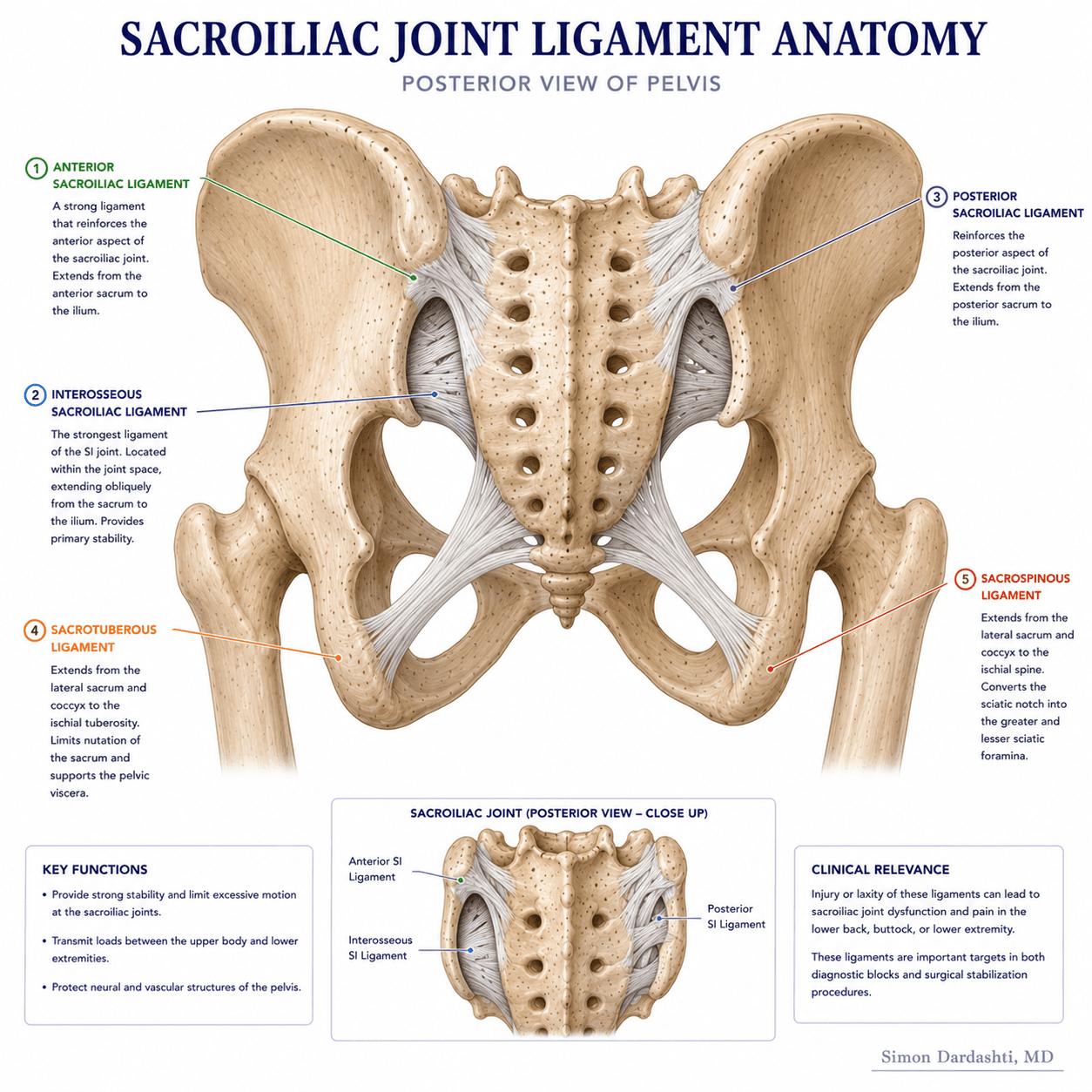
The sacroiliac (SI) joints connect the sacrum — the triangular bone at the base of the spine — to the iliac bones of the pelvis, one on each side. These joints bear load and transmit forces between the spine and lower limbs. When the SI joint becomes a pain source, symptoms may include pain in the low back, buttock, hip region, groin, or posterior pelvis.
Sacroiliac joint pain is often considered as part of the differential evaluation for low back and pelvic pain. Because the symptoms can closely resemble those of lumbar disc disease, facet-mediated pain, hip pathology, or muscular pain, clinical evaluation — rather than symptoms alone — is necessary to identify the SI joint as a likely pain contributor.
Diagnosis
Diagnostic Challenges.
No single symptom pattern, imaging finding, or physical examination test is sufficient on its own to confirm that the sacroiliac joint is the source of a patient's pain. Imaging studies such as X-ray or MRI may show SI joint changes but these do not always correlate with the patient's symptoms.
Physical examination tests that stress the sacroiliac joint — sometimes called provocative maneuvers — can support clinical suspicion of SI joint involvement when multiple tests are positive. A cluster of positive findings on examination, considered alongside the patient's symptom pattern and history, helps guide the clinical assessment.
An image-guided sacroiliac joint injection with local anesthetic may be used both diagnostically and therapeutically in appropriate clinical circumstances.
Approach
How Dr. Dardashti Evaluates Sacroiliac Joint Pain.
Evaluation includes a detailed history of pain location, character, and onset, along with review of prior treatments and their responses. Physical examination includes assessment of the lumbar spine, sacroiliac joints, and hip region to identify the most likely pain generators and differentiate SI joint involvement from other sources.
When imaging is available, findings are reviewed in clinical context. The goal is to develop a treatment plan based on the overall clinical picture rather than any single finding in isolation.
Treatment
Treatment Options That May Be Considered.
Treatment is individualized based on the clinical evaluation. Options that may be considered include:
- Physical therapy coordination targeting the sacropelvic region
- Medication management when clinically appropriate
- Sacroiliac joint injections for selected patients when SI joint involvement is supported by clinical evaluation
- Reassessment based on treatment response and ongoing clinical findings
Treatment recommendations are based on individual clinical evaluation. Not every patient with low back or posterior pelvic pain has SI joint involvement.
Limitations
Important Limitations.
Sacroiliac joint pain cannot be reliably diagnosed from symptoms alone. Multiple conditions can produce similar symptoms. Response to treatment varies among patients. A formal clinical evaluation is required to determine whether SI joint involvement is a likely contributor to an individual patient's pain. This page is for general informational purposes only and does not constitute medical advice or create a physician-patient relationship.
Dr. Dardashti sees patients in Mission Hills, California, serving patients from the San Fernando Valley, Santa Clarita Valley, and surrounding Los Angeles communities.
Related
Related Conditions & Procedures.
Medically Reviewed by Simon Dardashti, MD, MS·Board-Certified, Pain Medicine & Anesthesiology
Last Reviewed: July 2026