Procedures & Treatment Options
Epidural Steroid
Injections.
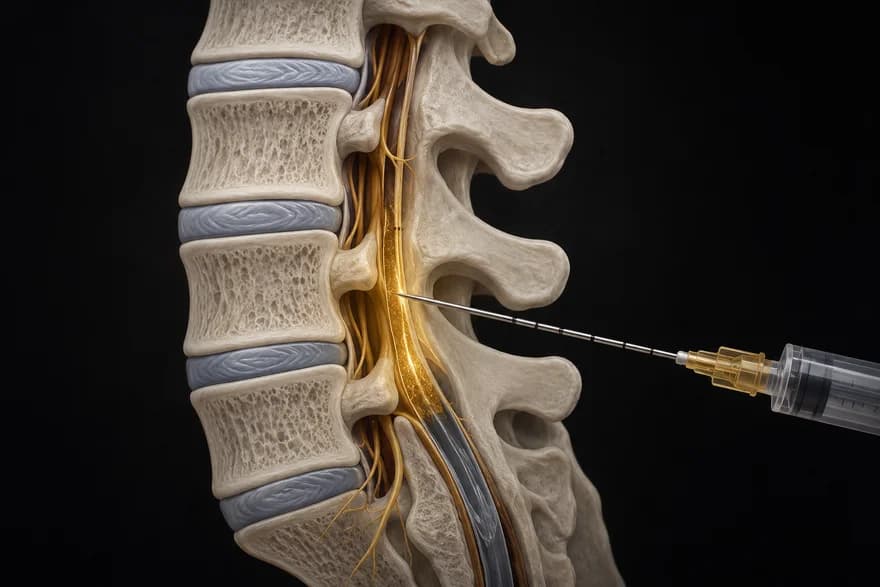
Epidural steroid injections are image-guided procedures that may be considered for selected patients with radicular pain or suspected nerve root irritation. A formal clinical evaluation is required to determine whether this procedure is appropriate for an individual patient.
In Brief
Image-Guided Procedure
Epidural steroid injections deliver anti-inflammatory medication near irritated spinal nerve roots under imaging guidance.
For Selected Patients
They may be considered for patients with radicular pain or suspected nerve root irritation when appropriate clinical criteria are met.
Response Varies
The procedure is not appropriate for every patient. Risks, benefits, and realistic expectations should be discussed before any procedure is performed.
Overview
What Are Epidural Steroid Injections?
Epidural steroid injections (ESIs) are procedures that deliver corticosteroid medication into the epidural space — the area surrounding the spinal cord and nerve roots inside the spinal canal. The goal is to reduce inflammation around irritated or compressed nerve roots, which may help reduce associated pain, numbness, or tingling.
Imaging guidance helps assess needle position and medication spread, but does not eliminate risk. The approach and access level depend on the indication, anatomy, and reviewed imaging. For cervical injections, the access point may differ from the level of the symptomatic disc. ESIs do not repair a disc or other structural spinal condition.
Approaches
Injection Approaches.
Different injection approaches may be used depending on the patient's anatomy, diagnosis, and clinical situation:
Interlaminar Epidural
Medication is delivered through the back of the spine into the epidural space, providing broader coverage of the epidural area.
Transforaminal Epidural
Medication is delivered near a specific nerve root foramen, allowing more targeted treatment of a particular nerve level.
Caudal Epidural
Medication is delivered through the sacral hiatus at the base of the spine and may be appropriate for certain lower lumbar or sacral symptoms.
Selective Nerve Root Block
A more targeted injection near a specific nerve root, which may also serve a diagnostic purpose to help confirm the symptomatic nerve level.
Candidacy
When May Epidural Steroid Injections Be Considered?
Epidural steroid injections may be considered for selected patients with:
- Radicular pain related to a herniated disc or spinal stenosis
- Cervical or lumbar nerve root irritation with radiating symptoms
- Symptoms that have not improved adequately with conservative treatment
- Symptoms significant enough to warrant procedural evaluation
Epidural steroid injections are not appropriate for every patient with back, neck, or leg pain. A clinical evaluation is required to determine appropriateness.
Limitations
Important Limitations.
Response to epidural steroid injections varies among patients. The procedure may provide temporary relief, partial relief, or no relief. Multiple injections may be considered in appropriate clinical circumstances, and the number of injections appropriate for a given patient depends on the clinical response and overall context.
As with any medical procedure, epidural steroid injections carry potential risks. Risks and benefits should be discussed in detail with the treating physician before any procedure is performed. This page is for general informational purposes only and does not constitute medical advice or create a physician-patient relationship.
Dr. Dardashti sees patients in Mission Hills, California, serving patients from the San Fernando Valley, Santa Clarita Valley, and surrounding Los Angeles communities.
Reading
Recommended Reading.
Learning about your condition and how procedures work can help you prepare for your consultation and make informed decisions about your treatment.
Medically Reviewed by Simon Dardashti, MD, MS·Board-Certified, Pain Medicine & Anesthesiology
Last Reviewed: July 2026
Evidence, risks, and discussion with your physician
Benefits differ by condition and response varies. The AAN review found benefits for radicular pain and disability mainly in the short term; durable pain relief remains uncertain. Findings for spinal stenosis differ, and benefit should not be assumed from an abnormal scan alone. Each repeat injection needs its own clinical rationale.
Epidural use of corticosteroids is off-label: FDA has not approved this route of administration. FDA warns of rare serious neurological complications, including stroke, paralysis, vision loss, and death. Discuss the expected benefit, individual risks, medication, approach, and alternatives with your physician. New sudden weakness, vision changes, severe unusual headache, or seizures after an injection require emergency assessment.
Sources and scope
- AAN: Epidural steroids for cervical and lumbar radicular pain and spinal stenosis — Summary for clinicians
- FDA Drug Safety Communication: rare but serious neurologic problems after epidural corticosteroid injections
- Safety practices for interventional pain procedures: Epidural and sacroiliac interventions
These sources support general education; they do not establish your diagnosis or replace individual assessment.