Conditions Evaluated
Lumbar Radiculopathy
Evaluation.
Lumbar radiculopathy describes symptoms that arise when a nerve root in the lower spine is compressed or irritated. Pain, numbness, tingling, or weakness may radiate from the low back into the buttock, leg, or foot. Dr. Dardashti evaluates this condition through clinical history, neurologic examination, and review of lumbar spine imaging.
In Brief
Nerve Root in the Low Back
Lumbar radiculopathy occurs when a nerve root in the lower spine is compressed or irritated. It can produce pain, numbness, or weakness that travels into the buttock, leg, or foot.
Disc Herniation Is a Common Cause
A herniated lumbar disc pressing on a nerve root is among the most common causes, though spinal stenosis and foraminal narrowing may also be contributing factors.
Evaluation Before Treatment
The level of nerve root involvement, severity of neurologic findings, and prior treatment history all inform treatment planning. A clinical evaluation is needed to determine the appropriate approach.
Overview
What Is Lumbar Radiculopathy?
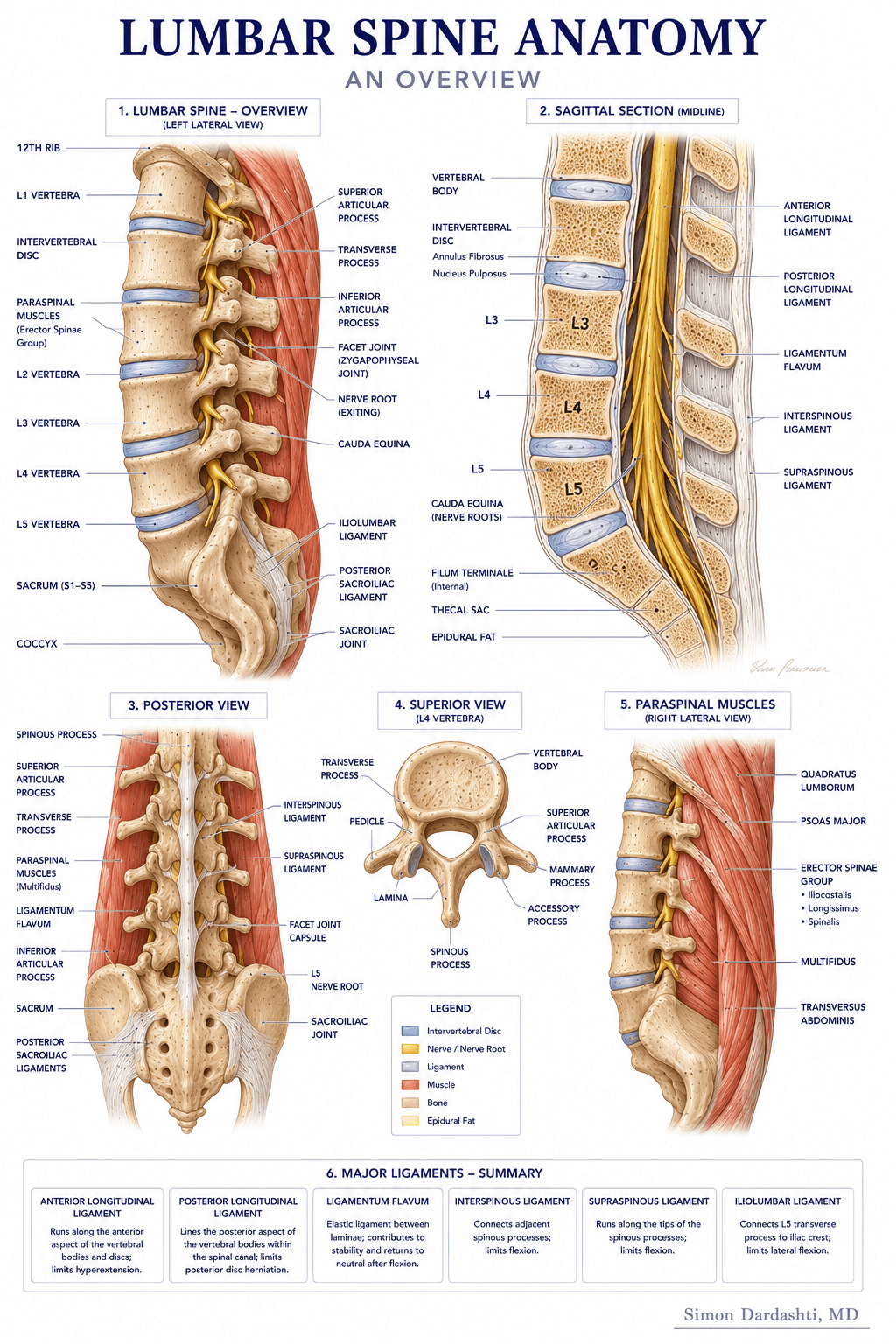
The lumbar spine consists of five vertebrae, with nerve roots exiting at each level through the foramina. When one of these nerve roots is compressed or chemically irritated — most commonly by a herniated disc or bony narrowing of the foramen — it can produce symptoms that radiate along the path of that nerve.
Lumbar radiculopathy is closely related to but distinct from the commonly used term "sciatica." Sciatica typically refers to symptoms traveling along the sciatic nerve distribution into the posterior thigh, leg, and foot, most often from L4, L5, or S1 nerve root involvement. Radiculopathy more broadly describes nerve root dysfunction at any lumbar level, and may also involve the upper lumbar roots, which refer symptoms into the anterior thigh.
Understanding the level and severity of nerve root involvement guides both the evaluation and selection of appropriate treatment options.
Symptoms
Common Symptoms.
Symptoms associated with lumbar radiculopathy may include:
- Low back pain that radiates into the buttock, thigh, leg, or foot
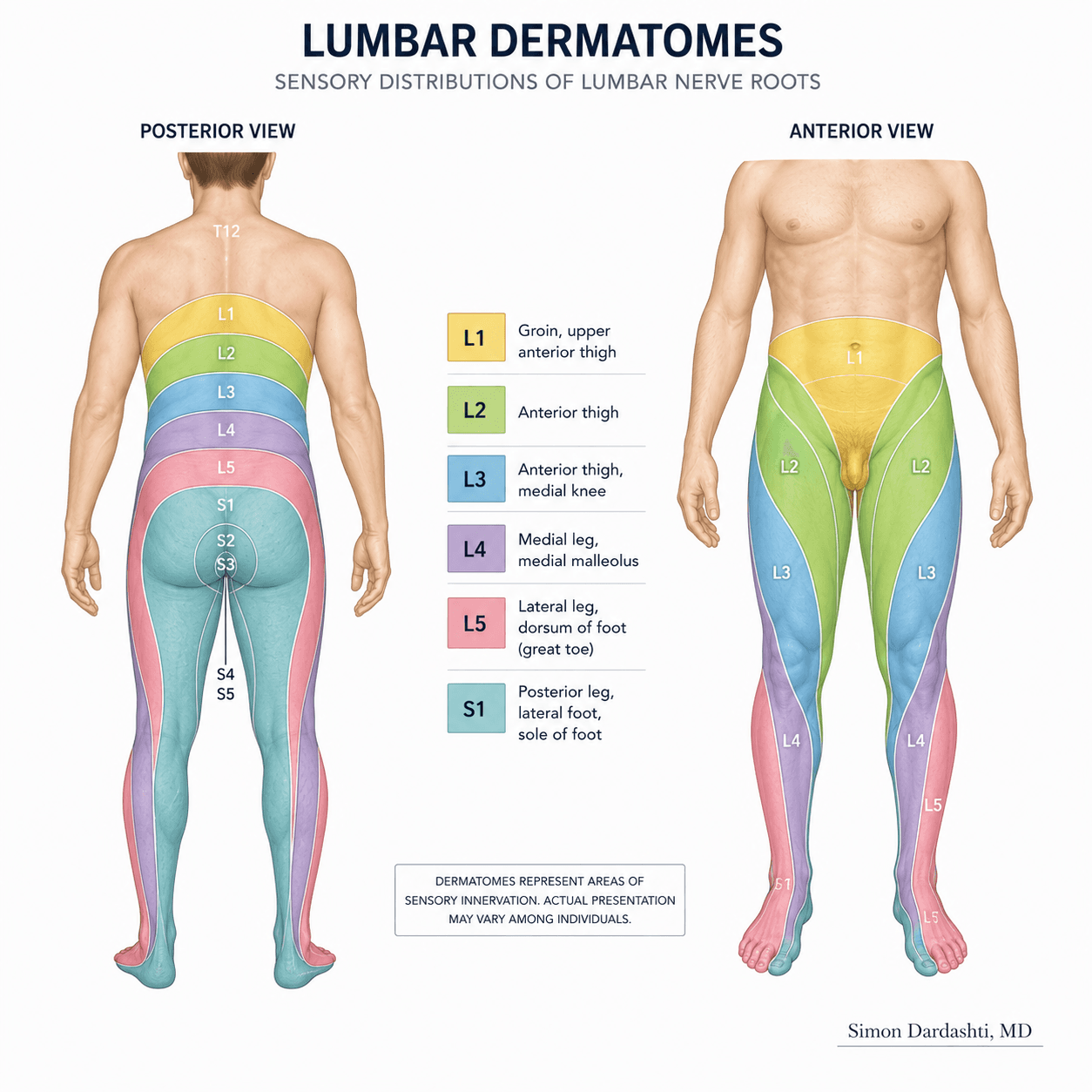
- Numbness or tingling following a specific dermatomal distribution in the leg or foot
- Weakness in the hip, thigh, knee, or foot muscles
- Pain that worsens with prolonged sitting, standing, or certain movements
- Pain that may improve with walking or lying in a specific position
- Reduced or absent deep tendon reflexes in the knee or ankle
Approach
How Dr. Dardashti Evaluates Lumbar Radiculopathy.
Evaluation begins with a detailed history of symptom onset, character, and distribution, along with a review of prior treatments and their responses. A neurologic examination assesses lower extremity strength, sensation, and reflexes to identify findings consistent with specific lumbar nerve root levels.
When lumbar MRI or other imaging is available, findings are reviewed alongside the clinical presentation. The presence of a disc herniation on MRI does not automatically indicate that an injection is needed — treatment decisions incorporate the severity of symptoms, functional impact, and whether conservative care has been tried.
The evaluation also assesses for red flag findings — such as significant or progressive weakness, bowel or bladder changes, or bilateral leg symptoms — which may require urgent specialist evaluation rather than pain management procedures.
Treatment
Treatment Options That May Be Considered.
Treatment depends on the nature and severity of symptoms, neurologic examination findings, and prior treatment history. Options that may be considered include:
- Conservative care including physical therapy and activity modification
- Medication management when clinically appropriate
- Lumbar epidural steroid injections — interlaminar or transforaminal — for selected patients with radicular leg symptoms
- Selective nerve root blocks for diagnostic or targeted therapeutic purposes
- Ongoing neurologic monitoring and reassessment of treatment response
- Referral for surgical evaluation when pain is refractory or neurologic deficits are progressive
Not every patient with lumbar radiculopathy requires an injection. Recommendations are based on individual clinical evaluation, neurologic findings, and functional goals.
Limitations
Important Limitations.
Lumbar radiculopathy has a variable natural history. Many patients improve with conservative care alone, while others have persistent symptoms that require further management. Response to treatment varies, and no procedure can be guaranteed to resolve radicular symptoms.
A formal clinical evaluation is required to determine the appropriate treatment approach for any individual patient. This page is for general informational purposes only and does not constitute medical advice or create a physician-patient relationship.
Dr. Dardashti sees patients in Mission Hills, California, serving patients from the San Fernando Valley, Santa Clarita Valley, and surrounding Los Angeles communities.
Related
Related Conditions & Procedures.
Medically Reviewed by Simon Dardashti, MD, MS·Board-Certified, Pain Medicine & Anesthesiology
Last Reviewed: July 2026