Whiplash-Associated Disorder
You were injured—perhaps in a car accident, a sports collision, or a fall—and your neck has been painful ever since. Your doctor said it was "just whiplash," but weeks or months later, the pain hasn't gone away. You're wondering: Why isn't this healing? Is there something seriously wrong? What can actually help?
Whiplash-associated disorder is common and can be complex. While many people recover quickly, others develop persistent symptoms that significantly impact their lives. Understanding what happened to your neck, why symptoms persist, and what treatment options exist is the first step toward recovery.
This page explains whiplash injuries from a medical perspective—what structures are involved, why healing can take time, and what evidence-based treatments can help you recover.
What Is Whiplash-Associated Disorder?
Whiplash-associated disorder (WAD) occurs when a sudden acceleration-deceleration force causes the head and neck to move rapidly backward then forward (or in other directions). This violent movement injures soft tissues—muscles, ligaments, joints, and nerves—in the neck.
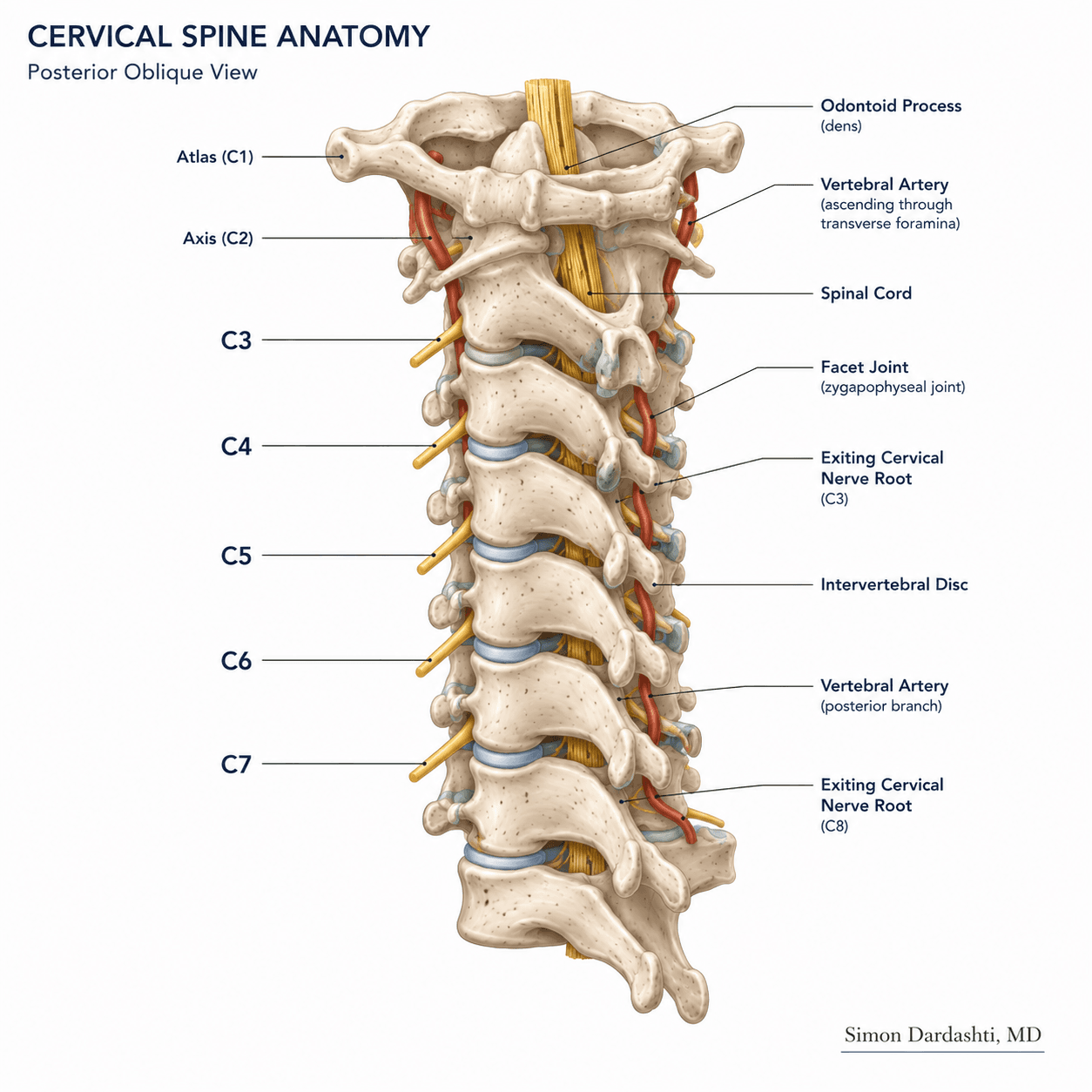
The injury typically affects several structures simultaneously:
- Cervical muscles: Strain from sudden acceleration causes muscle tears and inflammation
- Ligaments: The ligaments supporting the cervical spine can be stretched or torn
- Facet joints: Small joints connecting vertebrae can be irritated or develop inflammation
- Nerve roots: Nerves can be irritated by inflammation, muscle spasm, or joint involvement
- Discs: Cervical discs can be stressed or mildly herniated by the injury mechanism
The severity of injury varies widely—some people have minor soft tissue strain, others have more significant injury to multiple structures.
Common Causes
Motor Vehicle Collisions
The most common cause of whiplash. Rear-end, head-on, and side-impact collisions can all cause whiplash. Even low-speed collisions can cause significant injury if the vehicle is struck unexpectedly.
Sports Injuries
Contact sports (football, hockey, rugby), activities with falls or sudden movements (skiing, snowboarding), and tackling in any sport can cause whiplash-type injuries. High-speed collisions and tackles are particularly likely to cause significant injury.
Falls
Falls where the head or neck experiences rapid acceleration-deceleration can cause whiplash injury. This includes falls from height, falls on stairs, or falls where the body decelerates suddenly while the head and neck continue forward.
Common Symptoms
Whiplash symptoms vary based on injury severity but commonly include:
Neck symptoms: Neck pain, stiffness, limited range of motion, muscle tightness, pain radiating across the shoulders
Headaches: Often at the back of the head, sometimes radiating to the front or sides
Arm symptoms: Pain, numbness, or tingling radiating into the arms or hands if nerves are irritated
Other symptoms: Dizziness, jaw pain, upper back pain, difficulty concentrating
Important: Symptoms don't always start immediately after injury. Some people experience delayed onset of pain and stiffness, developing full symptoms over hours to days.
Why Symptoms Can Persist
Most whiplash injuries resolve within weeks to a few months. However, some people develop chronic pain. Understanding why this happens helps guide treatment:
- Ongoing inflammation: Inflammation from the initial injury can persist, continuing to irritate nerves and muscles
- Muscle protective spasm: Neck muscles may remain tight and guarded, preventing normal healing and creating a pain-tension cycle
- Nerve irritation: If nerves were irritated during the injury, ongoing inflammation may keep them irritated
- Facet joint involvement: Injured facet joints may develop arthritis or ongoing inflammation
- Deconditioning: If pain prevents activity early on, muscles weaken, perpetuating poor posture and pain
Factors that increase risk of chronic whiplash include: older age, pre-existing neck problems, high injury severity, psychological distress, and delayed initiation of treatment.
Why Imaging May Be Normal
After whiplash injury, many people have significant pain while imaging (MRI or X-ray) looks relatively normal. This can be frustrating—you're in pain, but doctors say "nothing is broken." Understanding why is important:
- Soft tissue injuries aren't always visible: Muscle strains, ligament injuries, and inflammation don't always show up on standard imaging
- Early imaging misses inflammation: Acute inflammation from injury isn't always apparent on imaging
- Minor joint injuries may not be visible: Small facet joint injuries or cartilage damage may not show on routine imaging
- Pain can exist without structural damage: Pain can be real and significant even when imaging is normal
Normal imaging after whiplash doesn't mean your injury isn't real—it means the structures involved don't show up on standard tests. Clinical evaluation is more important than imaging for whiplash diagnosis.
How I Evaluate Whiplash Injuries
Thorough evaluation of whiplash injury includes:
Detailed Injury History
How the injury occurred, initial symptoms, how symptoms evolved over time, what makes them better or worse, and what treatments have been tried
Comprehensive Physical Examination
Assessment of neck range of motion, muscle tenderness and spasm, palpation of structures, nerve testing, and specific maneuvers to identify pain sources
Imaging Review
If imaging exists, review for major structural problems. New imaging is ordered only if clinical findings suggest it would change treatment
Identification of Specific Pain Sources
Determining whether pain comes from muscles, joints, nerves, or a combination—this guides treatment selection
This comprehensive approach identifies what structures are causing pain so treatment can be targeted accurately.
Treatment Options
Activity Modification
Avoiding activities that aggravate symptoms while gradually returning to normal activity. Initial rest may be appropriate, but prolonged immobilization is generally avoided in favor of early gentle movement.
Physical Therapy
Specialized whiplash rehabilitation focusing on muscle strengthening, flexibility, posture correction, and cervical stability. This is a cornerstone of treatment for both acute and chronic whiplash.
Medications
Anti-inflammatory medications, muscle relaxants, and other medications depending on symptom type. Coordinated with your primary care doctor.
Trigger Point Injections
For persistent muscle tightness and trigger points common after whiplash. Injections relax muscles and interrupt pain-tension cycles.
Medial Branch Blocks
If facet joint pain is identified, diagnostic blocks can confirm this and provide relief while other treatments take effect.
Radiofrequency Ablation
For persistent facet joint pain, radiofrequency ablation can provide longer-lasting relief by reducing pain signals from irritated joints.
Recovery Expectations
Recovery from whiplash varies widely, but understanding typical timelines can help set realistic expectations:
- Acute phase (first 2-3 weeks): Initial inflammation, muscle guarding, pain is typically worst. Rest and ice are appropriate.
- Early recovery (weeks 3-8): Transition to active treatment. Physical therapy and gradual activity resumption typically begin. Pain gradually improves.
- Intermediate recovery (weeks 8-16): Most people show significant improvement. Progressive strengthening and return to activities continue.
- Longer term: Most acute whiplash resolves within 3 months. However, 20-30% of people develop chronic symptoms lasting longer.
Factors that speed recovery: early physical therapy, consistent treatment, gradual activity progression, and staying active despite pain (within limits). Early immobilization and extended rest can actually slow recovery.
When Additional Evaluation Is Needed
Seek additional evaluation if:
- Significant neurological symptoms: Weakness, numbness, or coordination problems
- Progressively worsening symptoms: Most whiplash improves over time; progressive worsening warrants investigation
- Pain not improving after 4-6 weeks: Earlier specialist evaluation can identify specific pain sources and initiate targeted treatment
- Persistent symptoms beyond 3 months: Evaluation for chronic pain patterns and procedural treatment options is appropriate
- Associated headaches or dizziness: May indicate cervicogenic headache or other specific problems worth evaluating
About Simon Dardashti, MD
Board-Certified Pain Medicine Physician
- • Specialized training in Pain Medicine from UCLA
- • 10+ years evaluating and treating whiplash injuries
- • Expert in identifying specific pain sources in whiplash injury
- • Focus on targeted, evidence-based treatment
- • Virtual consultations available
Frequently Asked Questions
How long does it take to recover from whiplash?
Most people recover within 3 months. However, recovery varies—some recover in weeks, others take longer. Factors like age, injury severity, and treatment compliance affect timeline. Early active treatment typically leads to faster recovery than prolonged rest.
Do I need imaging after whiplash?
Not always. If you have neurological symptoms (weakness, numbness) or signs of serious injury, imaging is appropriate. But for typical muscle strain and ligament injury, clinical evaluation is usually sufficient. Imaging is ordered based on findings, not routinely.
Will I have permanent damage from whiplash?
Most whiplash injuries heal completely without permanent damage. Some people develop chronic pain, but this isn't necessarily from structural damage—it can be muscle tension, nerve irritation, or altered pain processing that responds to treatment.
Should I continue physical therapy if it hurts?
Some discomfort during therapy is normal, but pain should be manageable. Tell your therapist if something is too painful—they can modify exercises. Gentle movement and gradual progression are important; overaggressive therapy can slow recovery.
Can I exercise with whiplash?
Yes, gradual exercise and physical therapy are important for recovery. Avoid high-impact activities or contact sports early on, but low-impact exercise and stretching should start early. Your physical therapist can guide appropriate activity level.
What treatment options are available for chronic whiplash?
Conservative management (physical therapy, medications, activity modification) should be tried first. If that's insufficient, specific pain sources can be identified through diagnostic evaluation and targeted with injections or procedures. Each person's treatment plan is individualized.
Related Resources
- Pain Without Imaging Findings — Understanding pain when imaging is normal
- Treatment Options — Overview of all pain management approaches
- Neck Pain — Comprehensive neck pain guide
- Cervicogenic Headache — Common whiplash complication
- Myofascial Pain — Muscle pain common in whiplash
- Virtual Consultations — Schedule an appointment
Evaluate Your Whiplash Injury
If you've suffered a whiplash injury and are experiencing persistent symptoms, comprehensive evaluation can identify exactly which structures are causing pain and what treatment options may help. Early intervention often leads to better outcomes than waiting.
Schedule a Virtual ConsultationVirtual consultations allow detailed history taking and discussion of your symptoms and treatment options.
Medical Disclaimer: This page is educational and does not constitute medical advice. All medical decisions should be made in consultation with a qualified healthcare provider who understands your complete medical history. If you have symptoms from whiplash injury, seek evaluation from a qualified pain medicine physician or your primary care doctor.