Procedures & Treatment Options
Trigger Point
Injections.
Trigger point injections are used to address myofascial pain and muscle-related pain conditions. A formal clinical evaluation is needed to determine whether trigger point injection is appropriate for any individual patient.
In Brief
What it is
An injection of medication directly into a trigger point in a muscle, used to address localized muscle tension and myofascial pain after appropriate clinical evaluation.
When it may be considered
In selected patients with myofascial pain, muscle tension, or trigger points when other conservative approaches have been tried and clinical evaluation supports its use.
What to expect
The trigger point is identified by palpation or imaging guidance, and a small amount of medication is injected into the muscle. The procedure typically takes 10-20 minutes. Patients are observed briefly and usually go home the same day.
Overview
What Are Trigger Points?
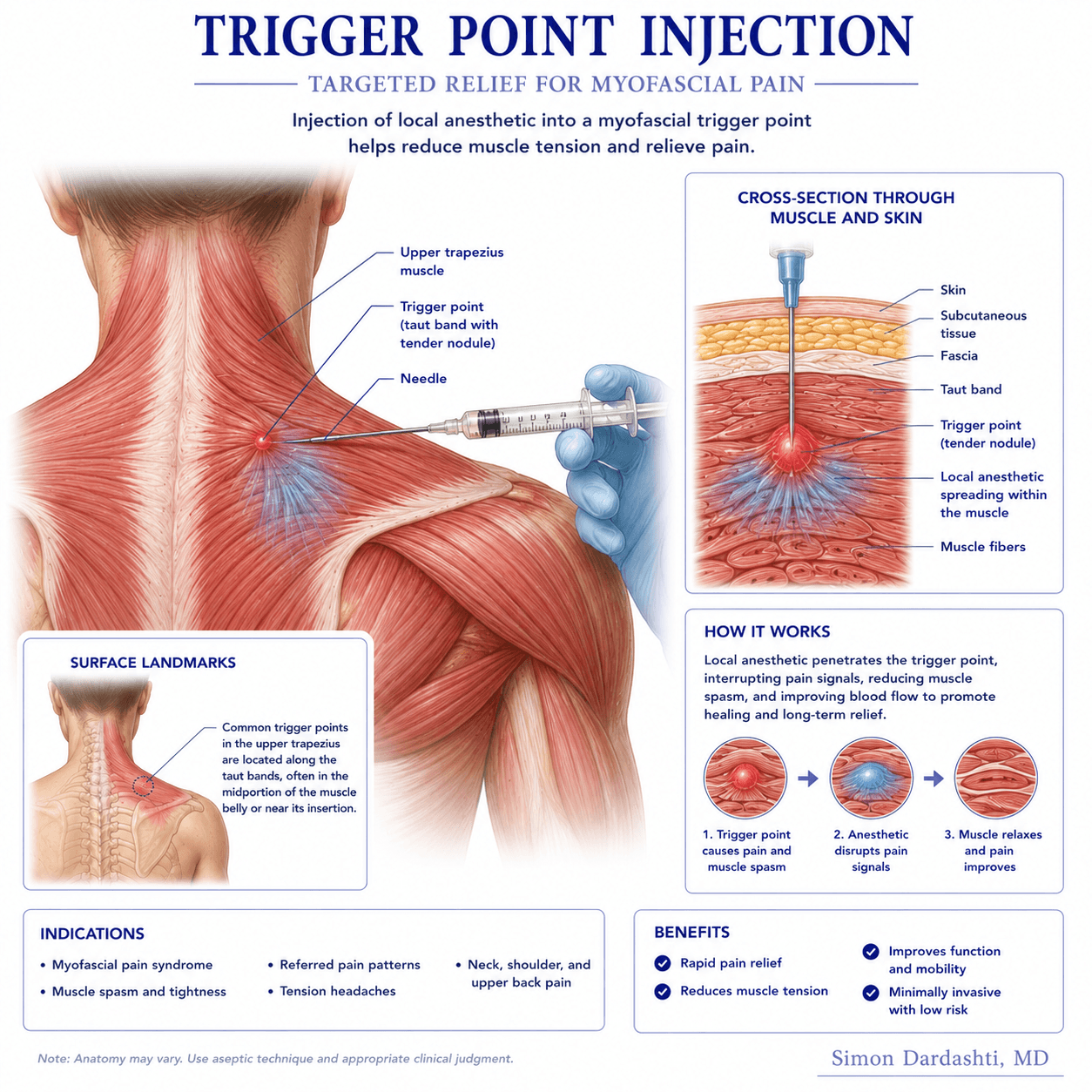
A trigger point is a localized area of muscle tension — a hyperirritable spot in a muscle that is tender when pressed. Trigger points can cause both local pain at the site and referred pain in other areas. The condition of having trigger points is called myofascial pain syndrome.
Trigger points are identified through physical examination by palpation (feeling) of the muscle. When compressed, a trigger point typically produces local tenderness and may reproduce or worsen the patient's pain complaint.
Indications
When Trigger Point Injections May Be Considered.
Trigger point injections may be considered for selected patients with:
- Myofascial pain syndrome
- Localized muscle tension and trigger points
- Muscle-related pain that has not responded adequately to conservative treatment
- Specific identifiable trigger points on physical examination
Whether trigger point injection is appropriate depends on the patient's diagnosis, physical examination findings, prior treatment response, and overall clinical context.
Procedure
The Trigger Point Injection.
The procedure begins with identification of the trigger point through palpation or imaging guidance. Once the trigger point is identified, medication is injected directly into the muscle at that location. The medication may consist of local anesthetic alone or may be combined with other medications, depending on the clinical situation.
The injection is relatively quick, typically taking 10-20 minutes. The patient is observed briefly after the procedure and usually goes home the same day. The area injected may feel sore initially, similar to the soreness after an injection.
Treatment
Trigger Point Injections as Part of a Treatment Plan.
Trigger point injections are often most effective when combined with other treatments, particularly physical therapy and stretching. Physical therapy can help address the underlying muscle tension and prevent trigger points from recurring.
The goal of trigger point injection is to reduce pain and muscle tension, enabling the patient to participate more effectively in physical therapy and other conservative care to address the underlying condition.
Questions
Frequently Asked Questions.
What is a trigger point?
A trigger point is a hyperirritable spot in a muscle that can cause local pain and referred pain. When pressure is applied to the trigger point, it may elicit tenderness or reproduce the patient's pain. Trigger points are part of the clinical diagnosis of myofascial pain.
What medication is injected?
The specific medication injected depends on the clinical situation and the physician's assessment. Options may include local anesthetic alone or local anesthetic combined with other medications. The choice is based on the patient's diagnosis, prior response to treatment, and medical history.
How quickly will I feel relief?
Some patients experience pain relief within hours or days after trigger point injection, while others may take longer or may not experience significant relief. Response is variable and depends on the chronicity and severity of the condition, which muscles are involved, and individual factors.
Are trigger point injections covered by insurance?
Insurance coverage for trigger point injections varies widely and depends on the insurance plan, the specific indication, and whether the procedure is considered a covered benefit. Patients should check with their insurance provider before proceeding.
Is trigger point injection the same as dry needling?
Trigger point injection and dry needling are related but different techniques. Trigger point injection involves injecting medication into the trigger point. Dry needling uses a needle without medication. Both are used to address trigger points, but they are distinct procedures.
How many trigger point injections will I need?
The number of injections recommended depends on the specific muscles involved, prior response, and clinical evaluation. Some patients may benefit from treatment of a single muscle, while others may have multiple trigger points that could be addressed over time.
Information
Important Information.
Trigger point injections are not appropriate for every patient or every myofascial pain condition. Response to trigger point injection is variable and depends on many factors including severity of the condition, chronicity, location, concurrent treatments, and individual patient factors.
A formal clinical evaluation is required to determine whether trigger point injection is an appropriate option for any individual patient. This page is for general informational purposes only and does not constitute medical advice or create a physician-patient relationship.
Dr. Dardashti sees patients in Mission Hills, California, serving patients from the San Fernando Valley, Santa Clarita Valley, and surrounding Los Angeles communities.
Related
Other Treatment Options.
Medically Reviewed by Simon Dardashti, MD, MS·Board-Certified, Pain Medicine & Anesthesiology
Last Reviewed: July 2026