Conditions Evaluated
Thoracic Outlet
Syndrome Evaluation.
Thoracic outlet syndrome results from compression of nerves and blood vessels as they pass through the thoracic outlet between the neck and shoulder. Dr. Dardashti evaluates thoracic outlet syndrome in the context of symptom presentation, physical examination findings, and results of diagnostic testing.
In Brief
Nerve and Vessel Compression
Thoracic outlet syndrome results from compression of nerves (brachial plexus) and blood vessels as they pass through the thoracic outlet between the neck and shoulder.
Varied Presentations
Symptoms depend on which structures are compressed and may include arm pain, numbness, tingling, weakness, and neck or shoulder discomfort.
Multifactorial Condition
Thoracic outlet syndrome results from anatomical compression and may be associated with postural factors, trauma, repetitive activities, or structural variations.
Overview
What Is Thoracic Outlet Syndrome?
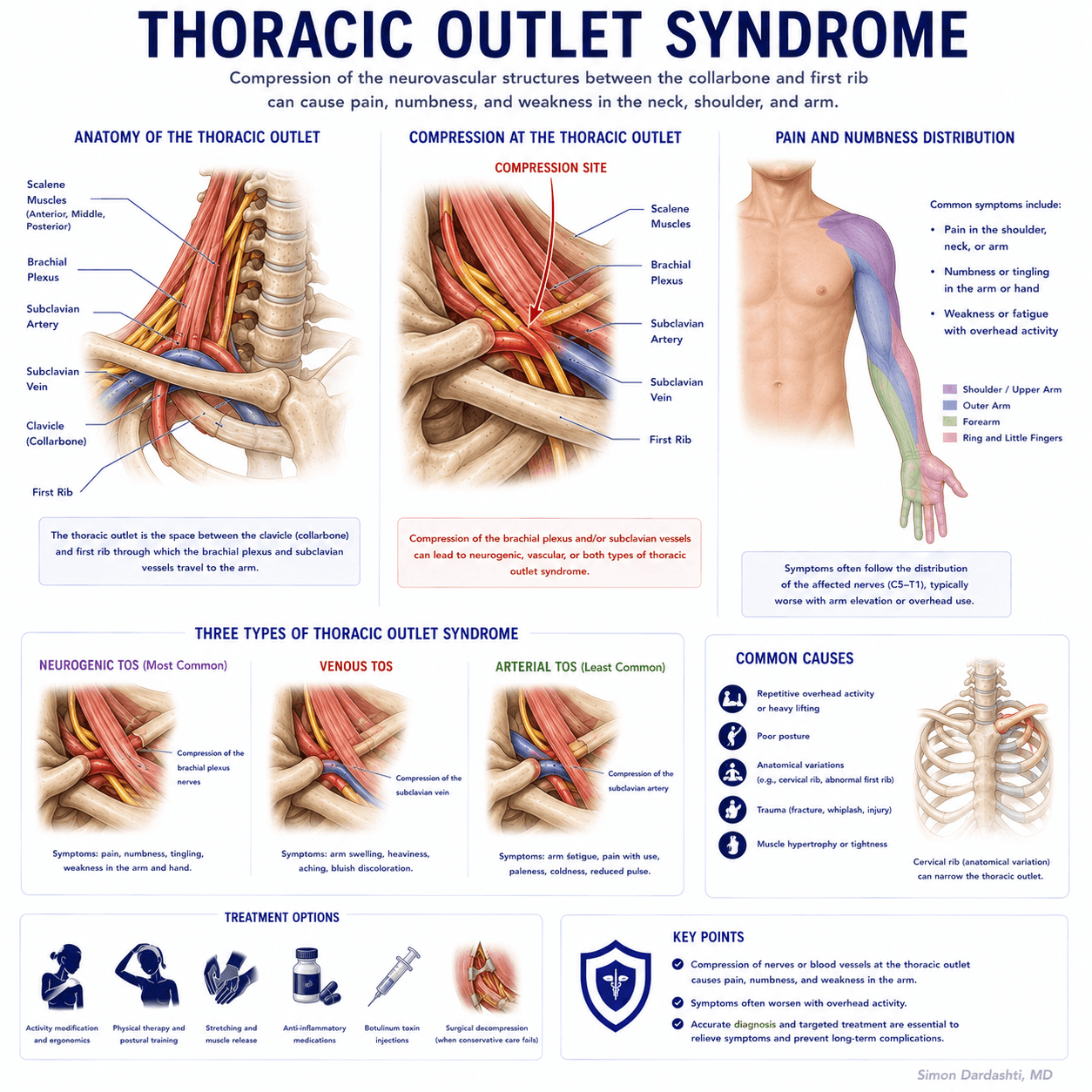
Thoracic outlet syndrome (TOS) results from compression of the brachial plexus (a network of nerves that controls arm movement and sensation) and blood vessels as they pass through the thoracic outlet — the anatomical space between the neck and shoulder formed by the collarbone, first rib, and surrounding muscles and tissues.
This compression can develop due to anatomical variations such as a cervical rib or muscle abnormalities, postural factors, repetitive activities, or trauma such as whiplash. The symptoms and severity depend on which structures are compressed and the degree of compression.
Thoracic outlet syndrome is distinct from cervical radiculopathy, which involves nerve compression at the spine. Understanding the specific type and cause of TOS is important for appropriate management.
Types
Types of Thoracic Outlet Syndrome.
Thoracic outlet syndrome is classified based on which structures are compressed:
- Neurogenic TOS: Compression of the brachial plexus (nerves), the most common type, causing arm pain, numbness, tingling, and weakness
- Venous TOS: Compression of the axillary or subclavian vein, potentially causing arm swelling, discoloration, or clotting
- Arterial TOS: Compression of the subclavian artery, potentially causing arm pain, coldness, or circulatory symptoms
The specific type affects how the condition is evaluated and treated. Accurate diagnosis helps determine the appropriate management approach.
Symptoms
Common Symptoms of Thoracic Outlet Syndrome.
Symptoms vary depending on which structures are compressed:
- Numbness and tingling in the arm, hand, or fingers
- Arm pain, aching, or heaviness
- Weakness in the arm or hand
- Neck and shoulder pain or discomfort
- Symptoms that worsen with overhead activities or repetitive arm use
- Symptoms that worsen with certain positions or postures
- Swelling in the arm or hand (less common)
- Discoloration of the arm or hand (with venous or arterial involvement)
Symptoms may be intermittent or constant and can vary in severity. Some patients experience symptoms that fluctuate with activity or posture.
Causes
Common Causes and Risk Factors.
Thoracic outlet syndrome results from compression of nerves and blood vessels at the thoracic outlet. Contributing factors may include:
- Anatomical variations such as a cervical rib or scalene muscle abnormalities
- Postural factors, particularly forward shoulder posture or upper crossed syndrome
- Repetitive overhead activities or repetitive arm use
- Trauma such as whiplash from motor vehicle accidents
- Muscle tension or tightness in the neck and shoulder region
- Hypertrophy (enlargement) of scalene or pectoralis muscles
- Clavicular fracture or abnormal healing
- Poor ergonomic setup during work or daily activities
Diagnosis
How Thoracic Outlet Syndrome Is Diagnosed.
Diagnosis of thoracic outlet syndrome begins with a detailed history of symptoms, including when symptoms started, what activities worsen them, and how they affect daily functioning. A thorough physical examination includes assessment of posture, palpation of the thoracic outlet region, and provocative maneuvers designed to reproduce symptoms.
Imaging studies such as cervical X-rays or MRI may be ordered to evaluate for structural abnormalities such as cervical ribs or other anatomical variations. Electrodiagnostic testing including electromyography (EMG) and nerve conduction studies may be performed to assess nerve function and help confirm nerve compression. Doppler ultrasound may be used if vascular involvement is suspected.
Thoracic outlet syndrome is primarily a clinical diagnosis based on symptoms and examination findings, though imaging and testing support the clinical impression. Not all patients with anatomical abnormalities on imaging have symptoms, and some symptomatic patients may not show obvious findings.
Treatment
Treatment Options That May Be Considered.
Treatment is individualized based on the type of TOS, severity of symptoms, and response to initial approaches:
- Physical therapy focused on postural correction, stretching of tight muscles, and strengthening of stabilizing muscles
- Activity modification to avoid or reduce positions and activities that worsen symptoms
- Ergonomic optimization of workspace or daily activities
- Medications such as muscle relaxants or neuropathic pain agents when clinically appropriate
- Conservative management including heat therapy and lifestyle modifications
- Surgical referral when conservative measures have been exhausted and symptoms remain significantly disabling, or when specific indications are present
Most cases of thoracic outlet syndrome respond to conservative treatment. The response to treatment depends on the underlying cause, patient compliance with therapy, and the specifics of the treatment approach. Diagnostic nerve blocks or other diagnostic injections are not a routine or standard treatment for thoracic outlet syndrome itself; they may occasionally be considered to help evaluate a specific suspected pain generator when a patient's presentation suggests an overlapping condition, such as myofascial pain. Whether any procedure is appropriate depends entirely on the individual clinical presentation.
Evaluation
When to Seek Medical Attention.
An evaluation for thoracic outlet syndrome can be helpful if you experience:
- Persistent numbness, tingling, or pain in the arm or hand
- Arm weakness that affects your ability to work or perform daily activities
- Neck and shoulder pain associated with arm symptoms
- Symptoms that worsen with overhead activities or repetitive arm use
- Symptoms that developed after a traumatic injury such as whiplash
- Symptoms that have not improved with initial conservative treatment
A clinical evaluation can help determine whether thoracic outlet syndrome is the underlying cause and guide appropriate treatment planning and management.
Certain symptoms may reflect vascular involvement and can warrant more prompt or urgent medical evaluation. These include sudden arm swelling, marked discoloration, unusual coolness of the arm or hand, other severe vascular-type symptoms, or symptoms that are rapidly worsening. Not every instance of arm swelling or color change is an emergency, but new or significant vascular symptoms should not be ignored and are best evaluated promptly by a medical professional.
FAQ
Frequently Asked Questions.
What does thoracic outlet syndrome feel like?
Symptoms vary depending on which structures are compressed. Patients may experience tingling and numbness in the arm or hand, arm pain or heaviness, weakness in the arm or hand, or neck and shoulder pain. Some describe a feeling of swelling or numbness that worsens with overhead activities or repetitive use.
Can thoracic outlet syndrome cause arm numbness?
Yes. When the brachial plexus (nerves that control the arm) is compressed in neurogenic thoracic outlet syndrome, numbness and tingling in the arm and hand are common symptoms. The distribution of numbness depends on which specific nerves are affected.
Is thoracic outlet syndrome the same as a pinched nerve?
Thoracic outlet syndrome is a type of nerve compression, but it differs from typical cervical radiculopathy (pinched nerve in the neck). In TOS, compression occurs at the thoracic outlet as nerves and vessels pass through anatomically tight spaces, whereas cervical radiculopathy typically involves compression at the spine itself. The locations, mechanisms, and appropriate evaluations differ.
Can thoracic outlet syndrome be seen on MRI?
MRI can show anatomical structures in the thoracic outlet region and may reveal contributory factors such as cervical ribs, muscle hypertrophy, or other anatomical variations. However, thoracic outlet syndrome is primarily a clinical diagnosis based on symptoms and physical examination findings. Not all anatomical abnormalities visible on imaging cause symptoms, and not all cases of symptomatic TOS show obvious findings on MRI.
Does thoracic outlet syndrome require surgery?
Most cases of thoracic outlet syndrome respond to conservative treatment including physical therapy, activity modification, and postural correction. Surgery is considered only when conservative measures have been exhausted and symptoms remain significantly disabling. When surgery is appropriate, the decision depends on the specific type of TOS, the structures involved, and the patient's overall clinical picture.
Can physical therapy help thoracic outlet syndrome?
Physical therapy is often a first-line treatment for thoracic outlet syndrome. Therapy typically focuses on postural correction, stretching of tight muscles, strengthening of stabilizing muscles, and activity modification. Many patients experience significant improvement with a well-designed physical therapy program. The effectiveness depends on the underlying cause, patient compliance, and the specifics of the therapy approach.
What is the difference between thoracic outlet syndrome and cervical radiculopathy?
Thoracic outlet syndrome and cervical radiculopathy are distinct conditions affecting different anatomical locations. Cervical radiculopathy involves compression of a nerve root at the spine, typically causing pain that radiates in a specific nerve distribution, often with weakness in muscles supplied by that nerve. Thoracic outlet syndrome involves compression of multiple nerves (brachial plexus) or blood vessels as they pass through the thoracic outlet, with a broader distribution of symptoms. The causes, diagnoses, and treatments differ, so accurate diagnosis is important.
Can thoracic outlet syndrome occur after a car accident?
Yes. Trauma such as whiplash from a car accident can contribute to thoracic outlet syndrome by causing neck and shoulder injuries, postural changes, or inflammation that compresses structures in the thoracic outlet. Some patients develop TOS symptoms immediately after trauma, while others develop symptoms gradually. An evaluation can help determine whether trauma was a contributing factor and guide treatment planning.
Limitations
Important Limitations.
Thoracic outlet syndrome diagnosis and management is complex. The condition can present in varied ways depending on the type and severity of compression, and response to treatment varies among patients. Some patients experience sustained relief with conservative treatment, while others may require procedural intervention or surgical referral. A formal clinical evaluation is required to determine appropriate treatment for any individual patient.
This page is for general informational purposes only and does not constitute medical advice or create a physician-patient relationship.
Dr. Dardashti sees patients in Mission Hills, California, serving patients from the San Fernando Valley, Santa Clarita Valley, and surrounding Los Angeles communities.
Medically Reviewed by Simon Dardashti, MD, MS·Board-Certified, Pain Medicine & Anesthesiology
Last Reviewed: July 2026