Procedures & Treatment Options
Peripheral
Nerve Blocks.
Peripheral nerve blocks are used to address nerve pain and neuropathic pain conditions by temporarily blocking pain signals in peripheral nerves. A formal clinical evaluation is needed to determine whether a peripheral nerve block is appropriate for any individual patient.
In Brief
What it is
An injection of anesthetic medication around a peripheral nerve to block pain signals, used to address pain in the nerve's distribution after appropriate clinical evaluation.
When it may be considered
In selected patients with peripheral nerve pain, neuropathic pain conditions, or nerve entrapment syndromes when other conservative approaches have been tried.
What to expect
The target nerve is located by palpation or ultrasound guidance, and anesthetic medication is injected around the nerve. The procedure typically takes 15-30 minutes. Patients are observed briefly and usually go home the same day.
Overview
How Peripheral Nerve Blocks Work.
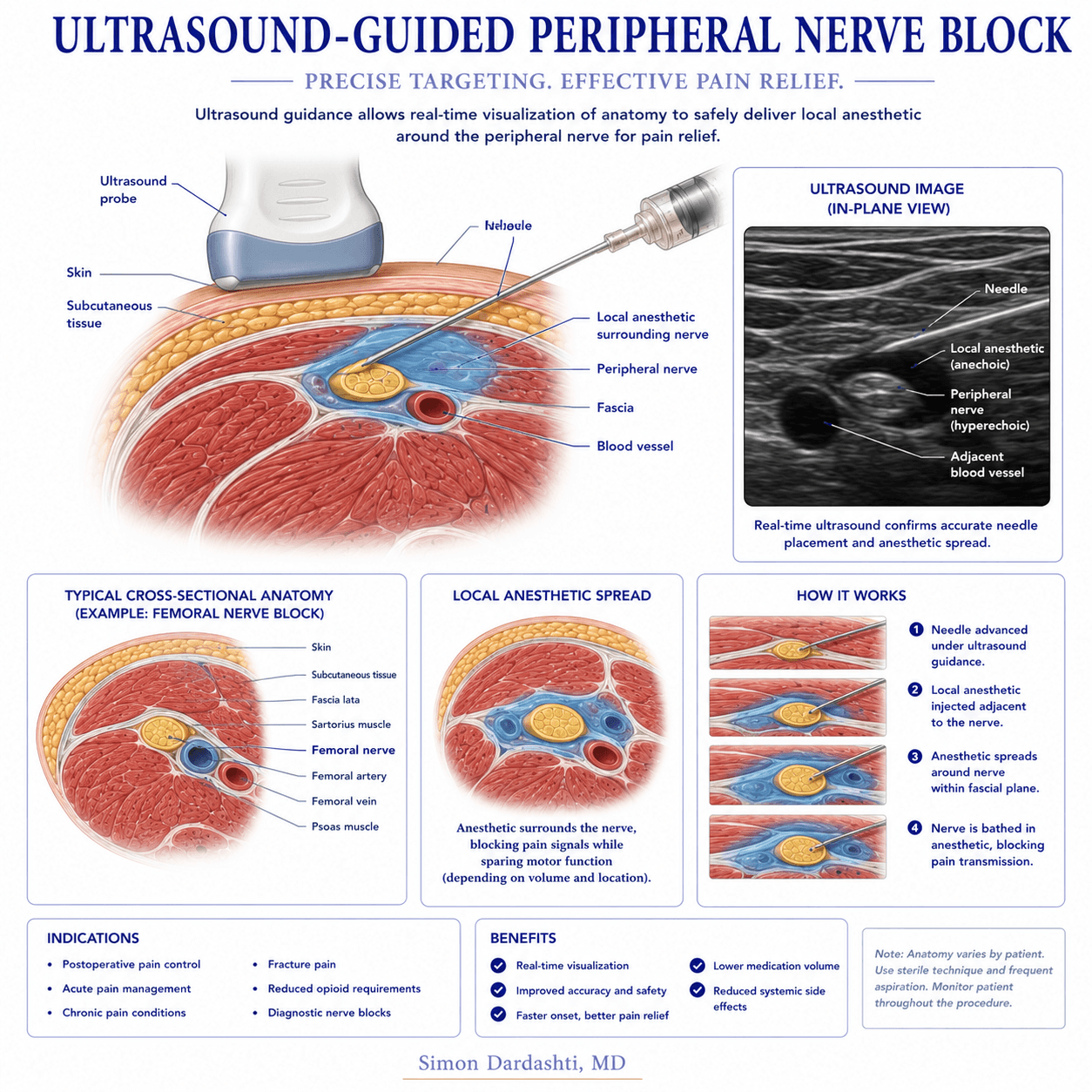
A peripheral nerve block works by injecting local anesthetic medication around a peripheral nerve. The anesthetic temporarily blocks the nerve's ability to transmit pain signals, providing relief from pain in the area supplied by that nerve.
The block is temporary — as the anesthetic wears off (typically over hours), the nerve function returns and pain sensation returns. However, some patients experience longer-lasting pain relief beyond the period of numbness from the anesthetic.
Indications
When Peripheral Nerve Blocks May Be Considered.
Peripheral nerve blocks may be considered for selected patients with:
- Peripheral nerve pain or neuropathic pain
- Pain from nerve compression or entrapment syndromes
- Pain in a peripheral nerve distribution
- Conditions where other conservative treatments have not provided adequate relief
- Conditions where a clinical evaluation supports the use of nerve blocks
The appropriate nerve to block depends on the location and distribution of the patient's pain, as identified by clinical examination and, when available, imaging.
Nerves
Peripheral Nerves and Pain Conditions.
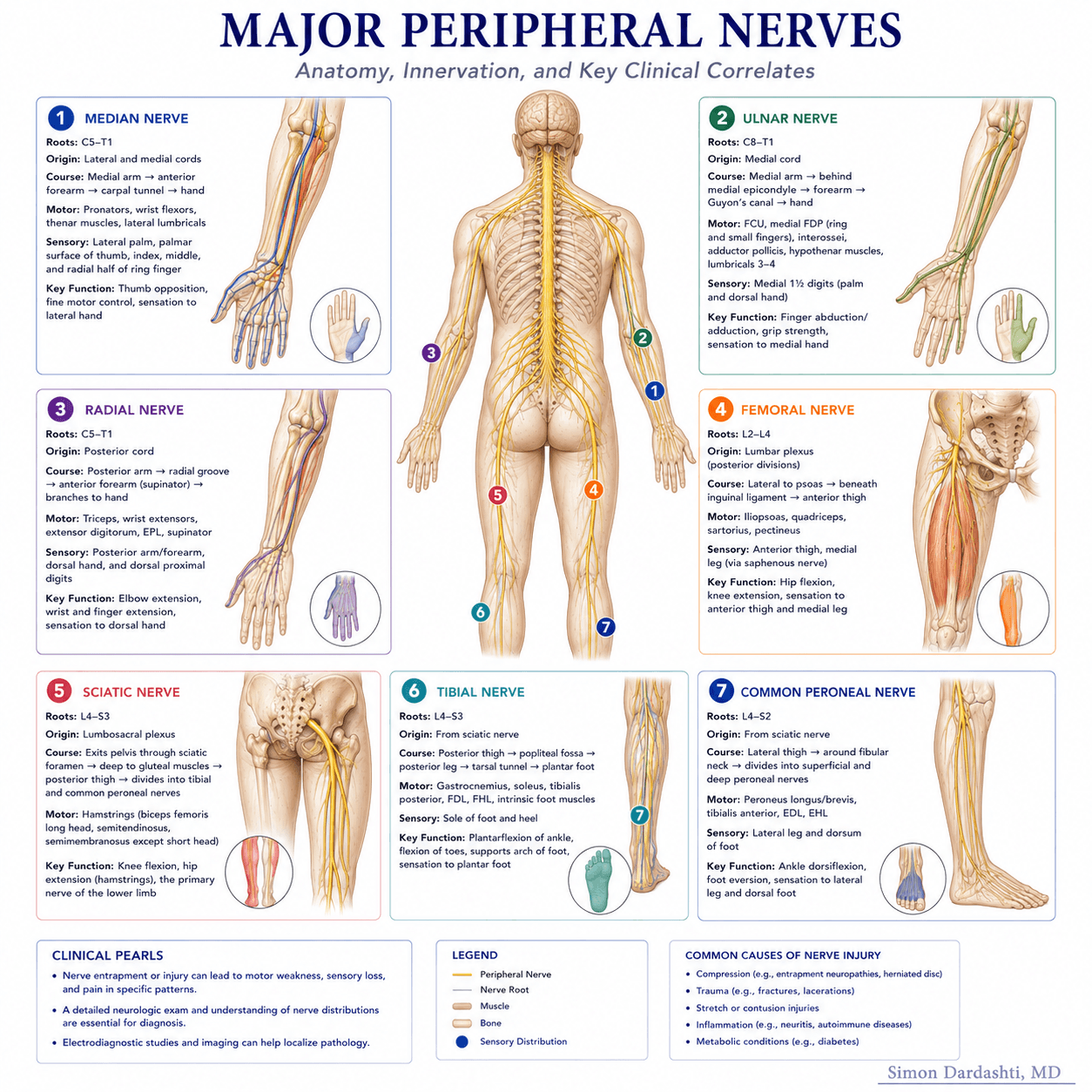
Many peripheral nerves can be targeted with nerve blocks depending on the location of pain. These include upper extremity nerves (such as those affecting the arm and hand), lower extremity nerves (such as those affecting the leg and foot), and other peripheral nerves throughout the body.
The specific nerve to be blocked is determined based on the patient's symptoms, location of pain, and clinical evaluation. A thorough history and physical examination helps identify which peripheral nerve is responsible for the patient's pain.
Procedure
The Peripheral Nerve Block Procedure.
The target peripheral nerve is identified by palpation of anatomical landmarks and/or ultrasound guidance. Ultrasound guidance improves accuracy by allowing visualization of the nerve and surrounding structures.
Once the nerve is located, local anesthetic is carefully injected around the nerve. The procedure typically takes 15-30 minutes depending on the specific nerve and anatomy. Patients are observed briefly after the procedure and usually go home the same day. Numbing typically begins within minutes to hours and lasts for several hours.
Questions
Frequently Asked Questions.
What are peripheral nerves?
Peripheral nerves are the nerves that extend from the spinal cord to the rest of the body, carrying sensory information and motor signals to muscles. When peripheral nerves become irritated, compressed, or inflamed, they can cause pain in the area they supply.
Is ultrasound guidance used?
Ultrasound guidance can improve the accuracy of peripheral nerve blocks by allowing the physician to visualize the nerve and surrounding anatomy. However, some peripheral nerve blocks can be performed using anatomical landmarks and palpation alone. The specific approach depends on the nerve being targeted and clinical situation.
How long does the numbing last?
The duration of numbness from the anesthetic medication typically lasts a few hours. However, some patients may experience longer-lasting pain relief beyond the period of numbness, suggesting additional benefit from the block.
Can nerve blocks be repeated?
Yes, peripheral nerve blocks can typically be repeated if they provide relief. The frequency of blocks is determined based on clinical response, pain duration, and treatment goals.
Is this a permanent treatment?
No, peripheral nerve blocks with local anesthetic provide temporary relief. They do not permanently cure the underlying nerve problem. Some patients benefit from repeated blocks; others may benefit from other treatments like physical therapy or longer-lasting interventions.
What are the risks?
Like all procedures, peripheral nerve blocks carry potential risks including nerve damage, bleeding, infection, allergic reaction, or inadequate block. Serious complications are rare when performed by experienced physicians using appropriate technique.
Information
Important Information.
Peripheral nerve blocks provide temporary relief from pain. They do not cure the underlying condition causing the pain. Response is variable and depends on the specific nerve involved, severity and chronicity of the pain condition, and individual patient factors. These blocks are not guaranteed to provide pain relief.
A formal clinical evaluation is required to determine whether a peripheral nerve block is an appropriate option for any individual patient. This page is for general informational purposes only and does not constitute medical advice or create a physician-patient relationship.
Dr. Dardashti sees patients in Mission Hills, California, serving patients from the San Fernando Valley, Santa Clarita Valley, and surrounding Los Angeles communities.
Related
Medically Reviewed by Simon Dardashti, MD, MS·Board-Certified, Pain Medicine & Anesthesiology
Last Reviewed: July 2026