Conditions Evaluated
Neuropathic Pain
Evaluation.
Neuropathic pain refers to pain that originates from damage or dysfunction of the nervous system itself — rather than from ongoing tissue injury. It can be one of the more challenging types of pain to evaluate and manage. Dr. Dardashti evaluates neuropathic pain conditions through a detailed clinical history, neurologic examination, and review of prior workup.
In Brief
Pain From the Nervous System
Neuropathic pain arises from injury or dysfunction of the peripheral or central nervous system — rather than from tissue damage alone. It often has a distinct character and requires different treatment strategies.
Multiple Possible Causes
Peripheral neuropathy, nerve compression, post-surgical nerve injury, shingles, diabetic nerve involvement, and complex regional pain syndrome are among the conditions that can produce neuropathic pain.
Evaluation Guides Management
Identifying the underlying mechanism and likely diagnosis helps guide treatment selection. Management may include medications, nerve-targeted procedures, and neuromodulation in selected patients.
Overview
What Is Neuropathic Pain?
Pain is broadly categorized by its mechanism. Nociceptive pain arises from activation of pain receptors in response to tissue damage or potential injury. Neuropathic pain, by contrast, arises from a lesion or disease affecting the somatosensory nervous system — either in the peripheral nerves or the central nervous system.
This distinction matters clinically because neuropathic pain often responds differently to treatment than nociceptive pain. Medications that work well for inflammatory or musculoskeletal pain may be less effective for neuropathic mechanisms, and certain treatments — such as neuromodulation — are specifically designed for nerve-mediated pain.
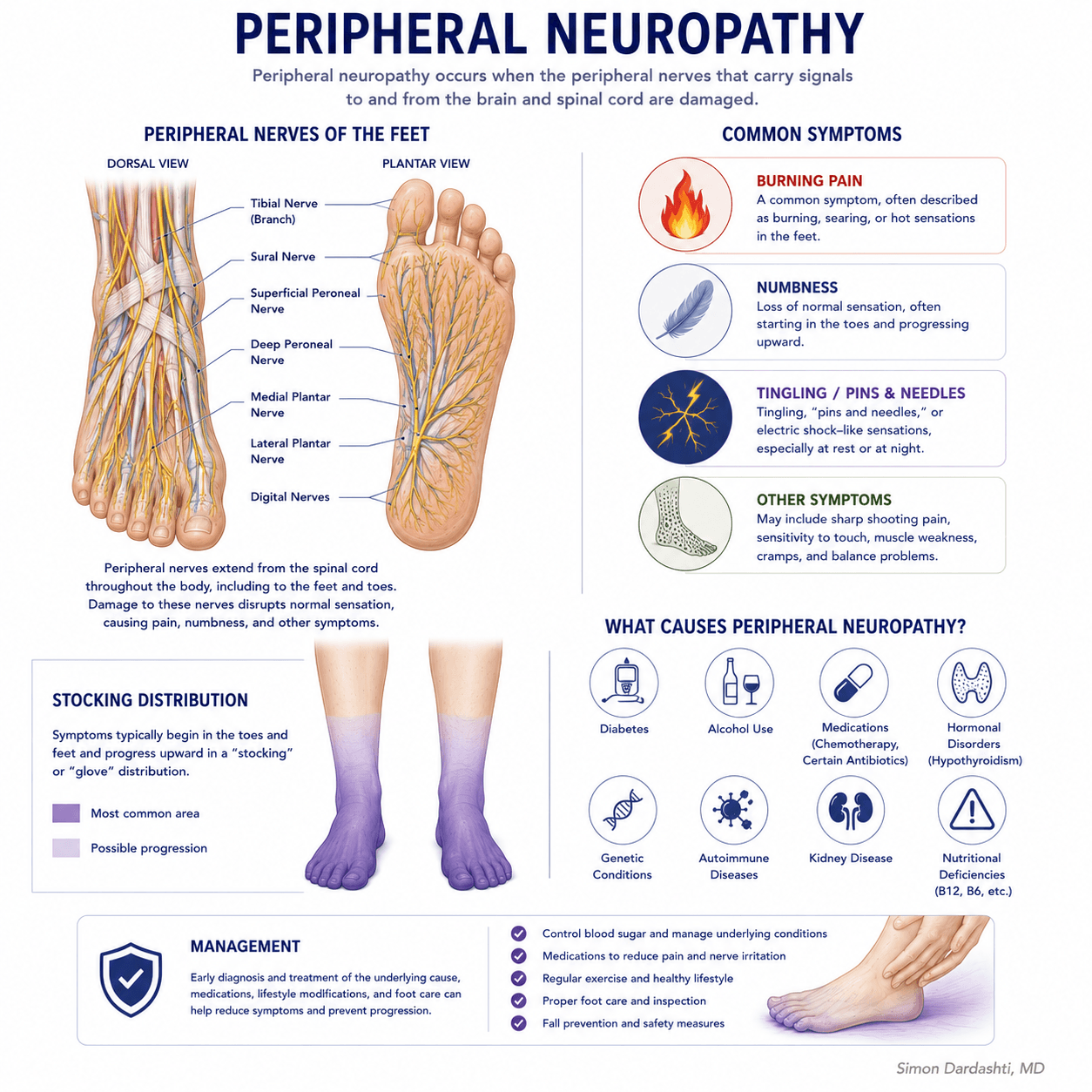
Neuropathic pain can have many causes. Peripheral causes include nerve compression, diabetic neuropathy, post-herpetic neuralgia (following shingles), post-surgical nerve injury, and trauma to peripheral nerves. Central causes may include conditions affecting the spinal cord or brain. Complex regional pain syndrome involves features of both peripheral and central sensitization.
Symptoms
Common Features of Neuropathic Pain.
Neuropathic pain often has a distinctive quality that differs from typical musculoskeletal pain. Features that may suggest a neuropathic component include:
- Burning, shooting, or electric shock-like pain
- Allodynia — pain produced by a stimulus that would not normally cause pain, such as light touch
- Hyperalgesia — an exaggerated pain response to a stimulus that would normally produce only mild pain
- Numbness, tingling, or a pins-and-needles sensation in the affected area
- Pain that is present at rest or at night, sometimes without an obvious mechanical trigger
- Pain persisting beyond expected healing time following injury or surgery
These features are not specific to any single diagnosis and require clinical evaluation to interpret in the context of each patient's history and examination.
Approach
How Dr. Dardashti Evaluates Neuropathic Pain.
Evaluation begins with a thorough history of pain onset, character, location, and any identifiable precipitating event — such as surgery, injury, infection, or a known systemic condition. Prior diagnostic workup, including nerve conduction studies, laboratory results, and imaging, is reviewed when available.
The neurologic examination focuses on characterizing sensory findings — including testing for allodynia, hyperalgesia, and sensory loss — as well as motor and reflex findings that may help localize the level or distribution of nerve involvement.
Identifying the underlying mechanism and diagnosis as specifically as possible helps guide treatment. For example, peripheral nerve entrapment may respond to targeted nerve blocks, while more diffuse or central neuropathic conditions may require a broader multimodal approach.
Treatment
Treatment Options That May Be Considered.
Treatment is individualized based on the likely mechanism, prior treatment history, and functional goals. Options that may be considered include:
- Medications with evidence for neuropathic pain, such as certain anticonvulsants, antidepressants, or topical agents when appropriate
- Targeted nerve blocks for peripheral nerve conditions when anatomically feasible
- Spinal cord stimulation evaluation for selected patients with refractory neuropathic pain
- Coordinated care with neurology or other specialists depending on the underlying condition
- Multimodal pain management planning incorporating functional rehabilitation
- Reassessment and adjustment of the treatment plan based on response
Neuropathic pain can be challenging to treat, and no single approach works for every patient. The goal of evaluation is to develop a treatment plan that is tailored to the individual's underlying condition and clinical presentation.
Limitations
Important Limitations.
Neuropathic pain is heterogeneous and may not fully resolve with any available treatment. Response is variable and often incomplete. The goal of management is typically to reduce pain to a manageable level and improve function, rather than complete elimination of symptoms.
A formal clinical evaluation is required to determine an appropriate treatment plan for any individual patient. This page is for general informational purposes only and does not constitute medical advice or create a physician-patient relationship.
Dr. Dardashti sees patients in Mission Hills, California, serving patients from the San Fernando Valley, Santa Clarita Valley, and surrounding Los Angeles communities.
Related
Medically Reviewed by Simon Dardashti, MD, MS·Board-Certified, Pain Medicine & Anesthesiology
Last Reviewed: July 2026