Conditions Evaluated
Complex Regional Pain
Syndrome Evaluation.
Complex regional pain syndrome (CRPS) is a chronic pain condition that requires careful clinical evaluation. Diagnosis is based on accepted criteria interpreted in the context of the patient's history, symptoms, and physical examination.
In Brief
Complex Presentation
CRPS involves a constellation of findings that may include pain, sensory changes, autonomic dysregulation, and motor or trophic changes. No single finding confirms the diagnosis.
Diagnostic Criteria
Accepted diagnostic criteria describe features that must be present for a clinical diagnosis of CRPS. These criteria require careful clinical interpretation alongside the patient's history and examination.
Individualized Treatment
Treatment planning for CRPS depends on clinical presentation, functional goals, and prior treatment response. Options may include physical therapy, medication management, and selected interventional approaches.
Overview
What Is Complex Regional Pain Syndrome?
Complex regional pain syndrome (CRPS) is a chronic pain condition characterized by pain that is disproportionate to the inciting event or ongoing tissue injury, along with associated sensory, autonomic, and potentially motor and trophic changes. CRPS typically involves an extremity, though presentations vary in character and severity.
CRPS Type I is described without an identified major nerve injury; Type II is associated with an identified major nerve injury. Type I does not prove that all nerve injury is absent. Clinical assessment is needed to interpret the distinction.
CRPS is a clinical diagnosis. It requires careful evaluation to support, and other conditions that may produce similar symptoms — including other nerve disorders, vascular conditions, or musculoskeletal pathology — must be considered as part of the diagnostic process.
Diagnosis
How CRPS Is Evaluated.
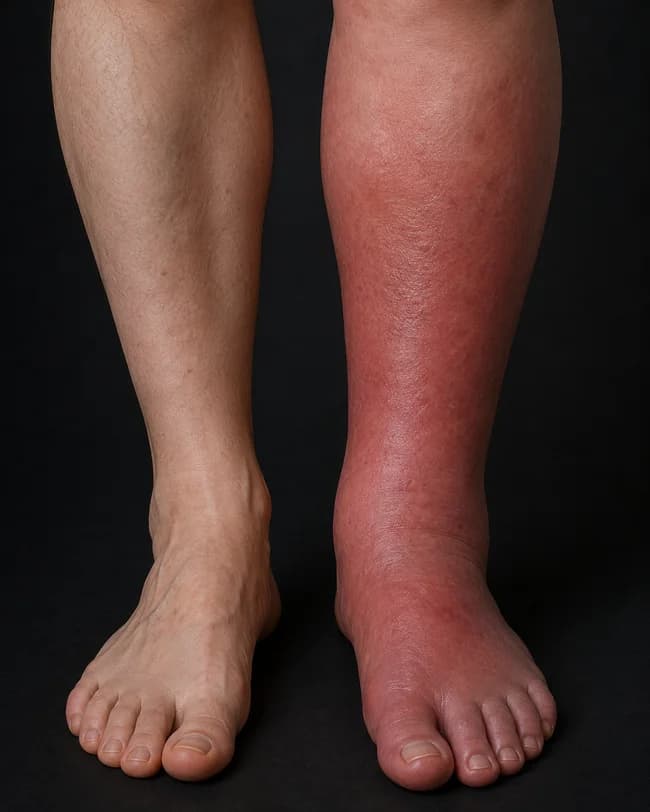
The clinical Budapest Criteria require continuing pain disproportionate to an inciting event, at least one reported symptom in at least three of four categories, and at least one sign observed at evaluation in at least two categories. No other diagnosis should better explain the findings. A symptom is what the patient reports; a sign is what the clinician observes. The categories are:
- Sensory — hyperalgesia (increased pain sensitivity) or allodynia (pain from normally non-painful stimuli)
- Vasomotor changes — skin temperature asymmetry or skin color changes
- Sudomotor and edema findings — swelling or sweating abnormalities
- Motor/trophic — reduced range of motion, weakness, tremor, dystonia, or changes to skin, hair, or nails
These findings must be interpreted in clinical context. Not all features are present in every patient, and findings may change over time or with treatment. Pain alone is not sufficient to support a diagnosis of CRPS. These are clinical criteria, not a self-diagnosis checklist or the separate research decision rule. Meeting diagnostic criteria does not by itself establish the cause of the condition.
Approach
How Dr. Dardashti Evaluates CRPS.
Evaluation includes a detailed history of symptom onset, character, location, and progression, along with review of relevant prior records, imaging, and treatments. Physical examination focuses on identifying features consistent with accepted diagnostic criteria while considering alternative or contributing diagnoses.
The clinical history — including the timing of symptom onset relative to any inciting event, the pattern of symptom evolution, prior treatments and their responses, and the patient's functional limitations — is an essential component of evaluation. The goal is a complete clinical picture, not a symptom checklist.
What information is useful for an evaluation?
Bring relevant prior records and test reports, a treatment and medication history, and a description of symptom changes and daily activities that have become difficult. Share patient-specific information through the appropriate medical office channel.
Treatment
Treatment Options That May Be Considered.
Treatment for CRPS is individualized based on clinical presentation and functional goals. Options that may be considered include:
- Physical and occupational therapy coordination
- Medication management when clinically appropriate
- Selected nerve blocks or other procedures when clinically indicated
- Spinal cord stimulation evaluation for selected patients with refractory symptoms
- Ongoing reassessment based on treatment response and clinical findings
Treatment recommendations for CRPS are based on individual clinical evaluation and functional goals. Response to treatment varies among patients.
Limitations
Important Limitations.
CRPS is a complex condition that requires careful clinical evaluation. Diagnosis requires interpretation of findings in the context of accepted criteria and cannot be made from symptoms or imaging alone. Other conditions may produce similar findings. Treatment response varies and is not predictable in advance. A formal clinical evaluation is required for any individual patient. This page is for general informational purposes only and does not constitute medical advice or create a physician-patient relationship.
Dr. Dardashti sees patients in Mission Hills, California, serving patients from the San Fernando Valley, Santa Clarita Valley, and surrounding Los Angeles communities.
Related
Related Conditions & Procedures.
Sources and scope
These references support the diagnostic framework and individualized treatment discussion. They do not predict an individual patient's diagnosis, cause, or treatment outcome.
- Harden RN, Bruehl S, Perez RSGM, et al. Validation of proposed diagnostic criteria (the “Budapest Criteria”) for Complex Regional Pain Syndrome. Pain. 2010;150(2):268–274.
- Harden RN, McCabe CS, Goebel A, et al. Complex Regional Pain Syndrome: Practical Diagnostic and Treatment Guidelines, 5th Edition. Pain Medicine. 2022;23(Suppl 1):S1–S53.
Medically Reviewed by Simon Dardashti, MD, MS·Board-Certified, Pain Medicine & Anesthesiology
Last Reviewed: July 2026