Procedures & Treatment Options
Spinal Cord Stimulation
Evaluation.
Spinal cord stimulation may be considered for selected patients with chronic nerve-related pain, persistent pain after spine surgery, or certain complex pain conditions. Evaluation determines whether a patient may be an appropriate candidate based on their overall clinical picture.
In Brief
Selected Patients Only
Spinal cord stimulation is not appropriate for every patient with chronic pain. Careful evaluation is required to determine whether a patient may be an appropriate candidate.
Comprehensive Evaluation
Evaluation may include review of diagnosis, imaging and treatment history, medication history, prior procedural response, functional limitations, and medical and psychological suitability.
Trial Before Permanent
When clinically appropriate, a temporary stimulation trial is typically considered before any discussion of permanent implantation. Response to the trial informs next steps.
Overview
What Is Spinal Cord Stimulation?
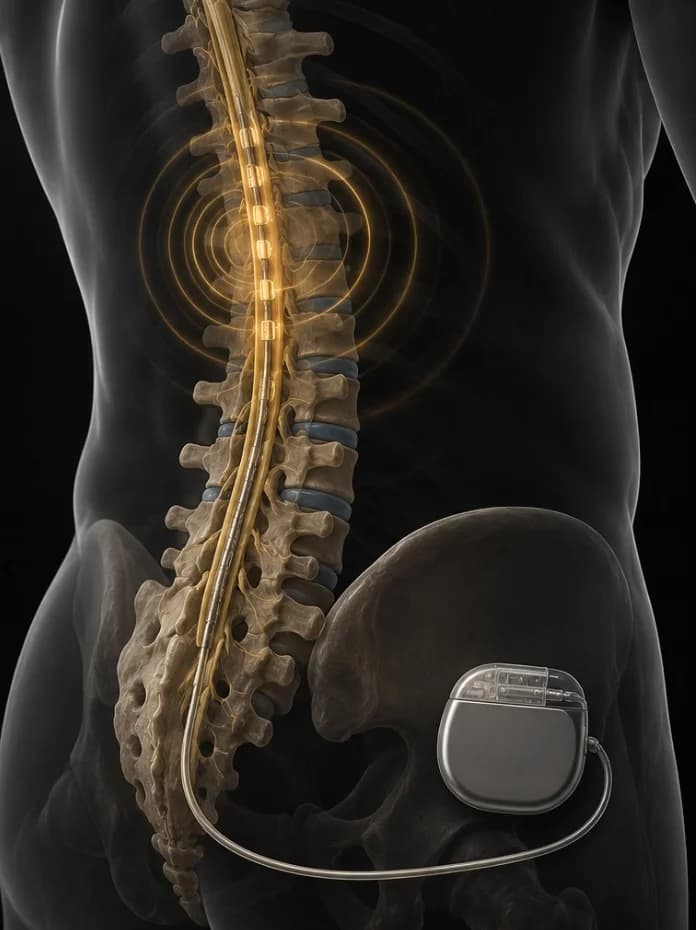
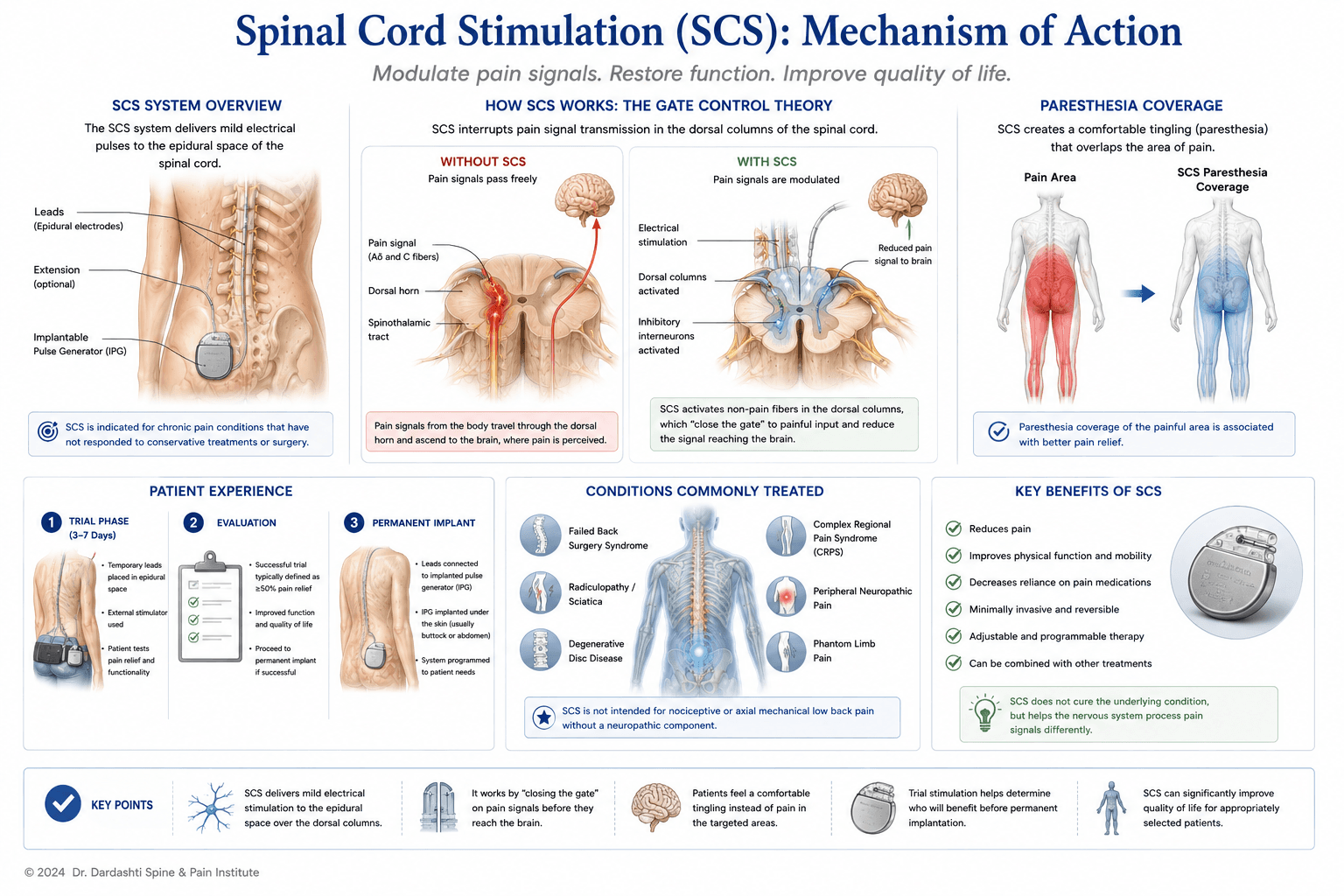
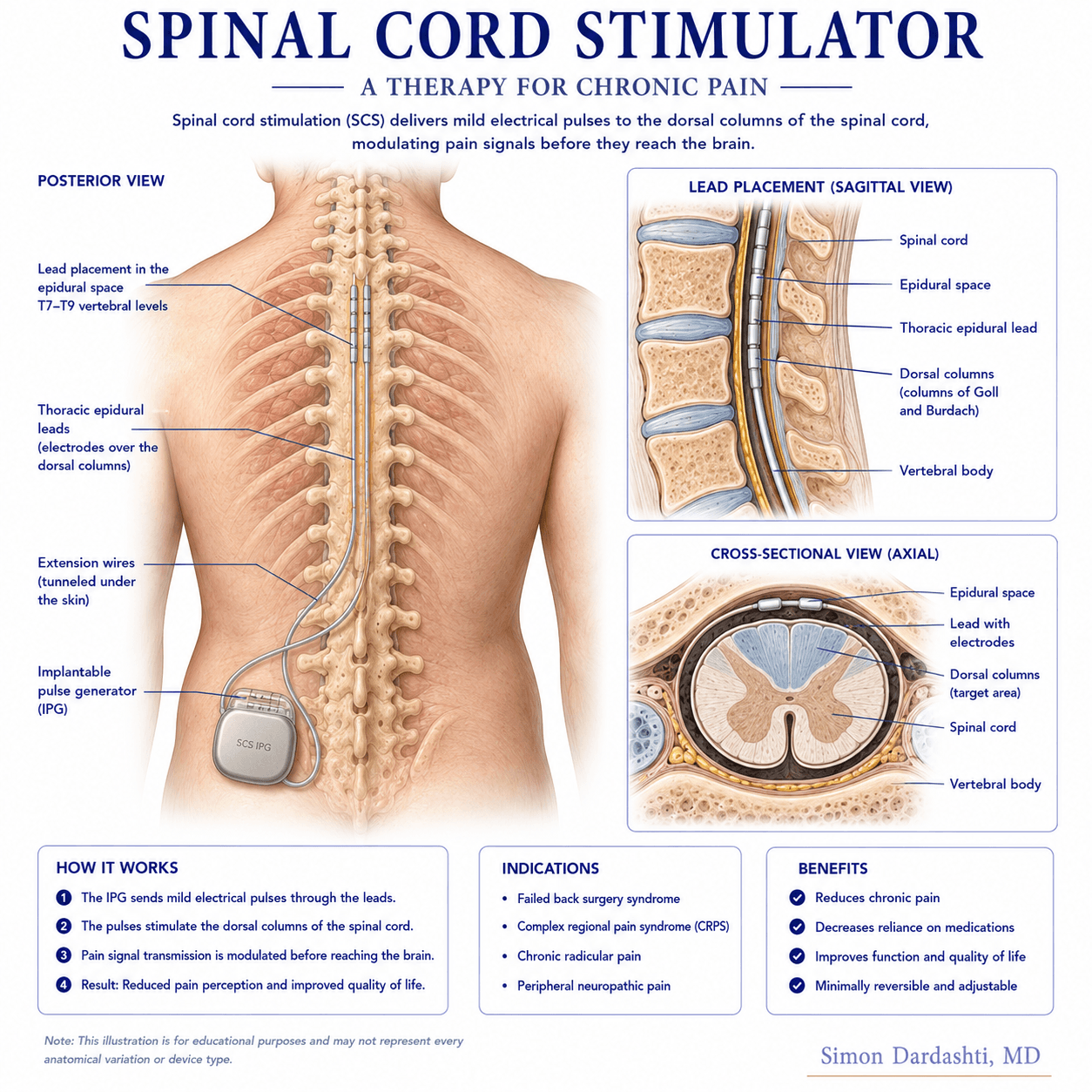
Spinal cord stimulation (SCS) is an interventional pain management option that delivers low-level electrical signals to the spinal cord through leads placed in the epidural space. These signals may modify pain perception in selected patients with certain types of chronic pain.
SCS may be considered for selected patients with chronic nerve-related pain, persistent pain after spine surgery, complex regional pain syndrome, or certain neuropathic pain conditions when other treatments have not provided adequate relief. SCS is not appropriate for every patient with chronic pain, and response to treatment varies among individuals.
Candidates
Who May Be Considered?
Patients who may be evaluated for spinal cord stimulation include those with:
- Chronic nerve-related pain that has not responded adequately to conservative or medical treatment
- Persistent pain after spine surgery when other treatments have been tried
- Complex regional pain syndrome when clinically appropriate
- Certain neuropathic pain conditions when prior treatments have not provided sufficient relief
SCS is not a first-line treatment. It is typically considered after appropriate conservative, medical, and other interventional options have been tried.
Approach
How Dr. Dardashti Evaluates for Spinal Cord Stimulation.
Evaluation for spinal cord stimulation includes a detailed review of the patient's diagnosis, imaging and treatment history, medication history, prior procedural responses, and functional limitations. Medical and psychological suitability are also considered as part of the evaluation process.
The goal of evaluation is to determine whether SCS is an appropriate treatment consideration for an individual patient based on the overall clinical picture, rather than any single finding or symptom in isolation.
Trial
The Trial Process.
When spinal cord stimulation is considered clinically appropriate, a temporary stimulation trial is typically considered before any discussion of permanent implantation. The trial allows assessment of whether the therapy provides meaningful benefit for the individual patient.
Response to SCS varies among patients. Not all patients who undergo a trial will proceed to permanent implantation, and not all patients who receive a permanent implant experience sustained long-term benefit. Patient selection, realistic expectations, and ongoing clinical reassessment are important components of the process.
Limitations
Important Limitations.
Spinal cord stimulation is not appropriate for every patient with chronic pain. Response to treatment varies and cannot be predicted in advance. SCS is typically considered after other treatments have been tried. A formal clinical evaluation is required to determine whether SCS is an appropriate consideration for any individual patient. This page is for general informational purposes only and does not constitute medical advice or create a physician-patient relationship.
Dr. Dardashti sees patients in Mission Hills, California, serving patients from the San Fernando Valley, Santa Clarita Valley, and surrounding Los Angeles communities.
Medically Reviewed by Simon Dardashti, MD, MS·Board-Certified, Pain Medicine & Anesthesiology
Last Reviewed: July 2026