Conditions Evaluated
Peripheral Nerve Pain
Evaluation.
Peripheral nerve pain describes pain that originates from damage or irritation of nerves outside the spinal cord and nerve roots. It can overlap in presentation with radiculopathy and other pain conditions, which is why careful clinical evaluation is central to identifying the likely source.
In Brief
Distinct From Spinal Radiculopathy
Peripheral nerve pain arises from irritation or injury to nerves outside the spinal canal. It is evaluated differently from radiculopathy and may involve focal entrapment, post-traumatic changes, or other peripheral mechanisms.
Variable Presentation
Symptoms may include focal burning, shooting pain, numbness, or tingling in a distribution that does not follow a typical dermatomal pattern. Location and character of symptoms help guide evaluation.
Accurate Diagnosis Matters
Peripheral nerve pain is often confused with radiculopathy or musculoskeletal pain. Distinguishing between these requires careful clinical evaluation before treatment is selected.
Overview
What Is Peripheral Nerve Pain?
The peripheral nervous system includes all the nerves that travel beyond the spinal cord — through the limbs, torso, and extremities. When one or more of these nerves is compressed, stretched, injured, or otherwise irritated at a site outside the spine, the resulting pain is termed peripheral nerve pain or peripheral neuropathic pain.
Common examples include nerve entrapment conditions — such as a nerve compressed beneath a ligament, at a fibrous tunnel, or at a site of scar tissue following surgery or injury. Unlike radiculopathy, where the problem originates at a spinal nerve root, peripheral nerve pain typically involves a more distal segment of the nerve and may produce symptoms confined to a specific nerve's distribution rather than a dermatomal pattern.
The distinction matters clinically because it affects both the diagnostic approach and the treatment options that may be considered. Misidentifying a peripheral nerve problem as radiculopathy — or vice versa — can lead to treatments that are not well matched to the underlying source.
Symptoms
Common Symptoms and Presentations.
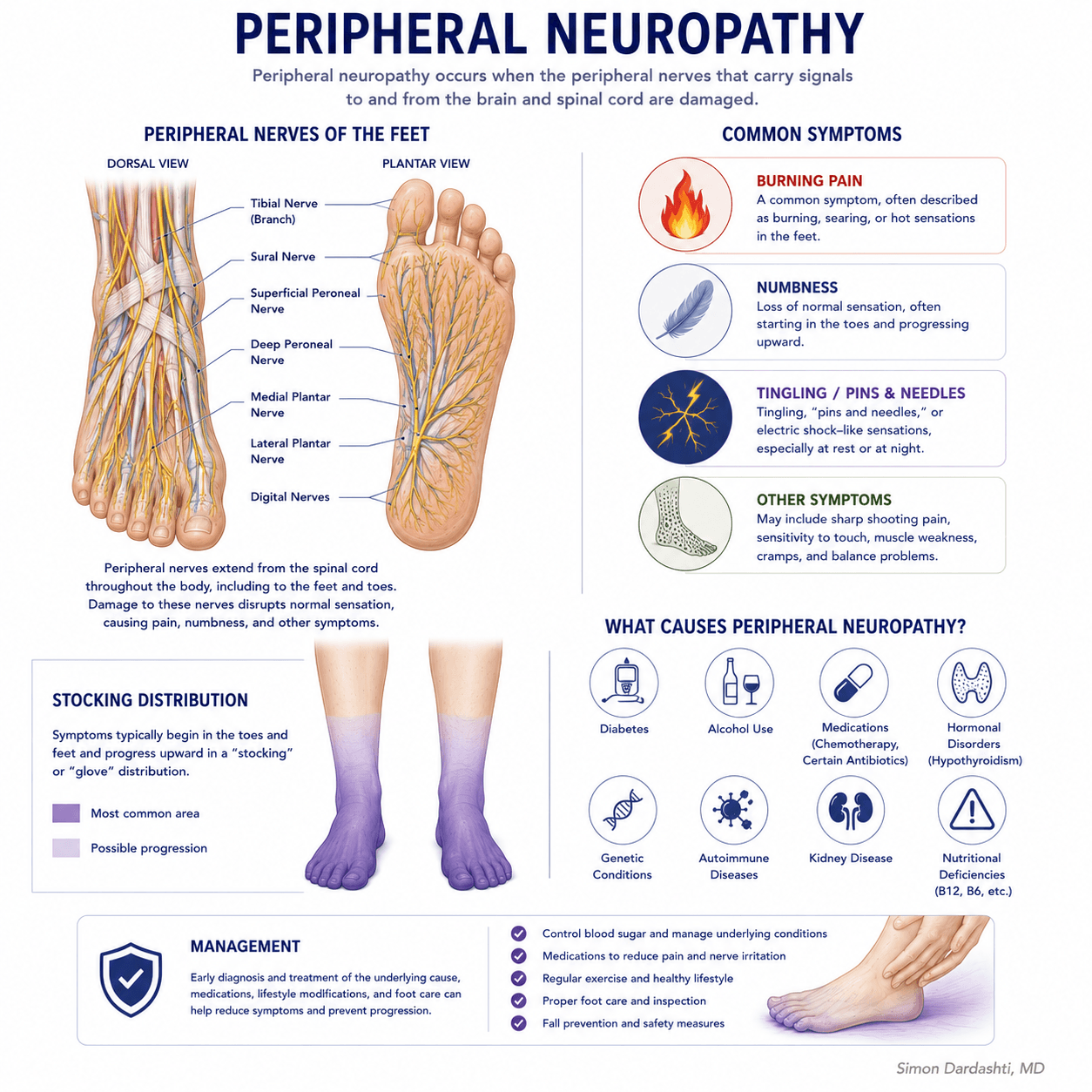
Peripheral nerve pain can present in a variety of ways depending on which nerve is involved and the nature of the injury or irritation. Common features include:
- Burning, shooting, or electric-like pain in a focal distribution
- Numbness or tingling in the territory of a specific peripheral nerve
- Pain that is reproduced or worsened by pressure at the site of nerve irritation
- Allodynia — discomfort with light touch over the affected area
- Weakness or loss of fine motor control if motor fibers are involved
- Symptoms that do not follow a typical radicular or dermatomal pattern
- Pain that persists or develops following surgery, trauma, or a prior injury in the area
Approach
How Dr. Dardashti Evaluates Peripheral Nerve Pain.
Evaluation begins with a detailed history of the onset of symptoms, their distribution, quality, and any precipitating event such as prior surgery, trauma, prolonged compression, or a known systemic condition. The relationship of symptoms to activity, posture, and provocative maneuvers is also assessed.
The physical examination focuses on localizing the nerve involved — including palpation for tenderness at known entrapment sites, provocative testing, and a neurologic assessment of sensation, strength, and reflexes. When available, nerve conduction studies and electromyography reports are reviewed to help characterize the nature and severity of nerve involvement.
Peripheral nerve pain can coexist with radiculopathy or central sensitization, which can complicate the clinical picture. When the diagnosis is uncertain, targeted diagnostic nerve blocks may help clarify the contributing anatomy before treatment decisions are made.
Treatment
Treatment Options That May Be Considered.
Treatment depends on the nature, location, and severity of the nerve involvement, as well as prior treatment history. Options that may be considered include:
- Medications with evidence for peripheral neuropathic pain when clinically appropriate
- Targeted peripheral nerve blocks for diagnostic or therapeutic purposes in selected patients
- Activity modification and physical therapy approaches to reduce mechanical nerve irritation
- Coordination with neurology when electrodiagnostic evaluation or further workup is warranted
- Spinal cord stimulation evaluation for selected patients with refractory peripheral nerve pain
- Multimodal pain management planning incorporating functional goals
Not every patient requires an injection or procedural intervention. Recommendations are based on individual clinical evaluation, the likely underlying mechanism, and prior treatment history.
Limitations
Important Limitations.
Peripheral nerve pain can be difficult to diagnose with certainty. Multiple contributing factors may be present simultaneously, and diagnostic testing does not always identify a clear anatomic source. Response to treatment varies among patients.
A formal clinical evaluation is required to determine the appropriate diagnostic and treatment approach for any individual patient. This page is for general informational purposes only and does not constitute medical advice or create a physician-patient relationship.
Dr. Dardashti sees patients in Mission Hills, California, serving patients from the San Fernando Valley, Santa Clarita Valley, and surrounding Los Angeles communities.
Related
Medically Reviewed by Simon Dardashti, MD, MS·Board-Certified, Pain Medicine & Anesthesiology
Last Reviewed: July 2026