Conditions Evaluated
Cervical Radiculopathy
Evaluation.
Cervical radiculopathy refers to symptoms that arise when a nerve root in the neck is compressed or irritated. It can cause pain, numbness, tingling, or weakness that radiates from the neck into the shoulder, arm, or hand. Dr. Dardashti evaluates this condition through clinical history, neurologic examination, and review of cervical spine imaging.
In Brief
Nerve Root Origin
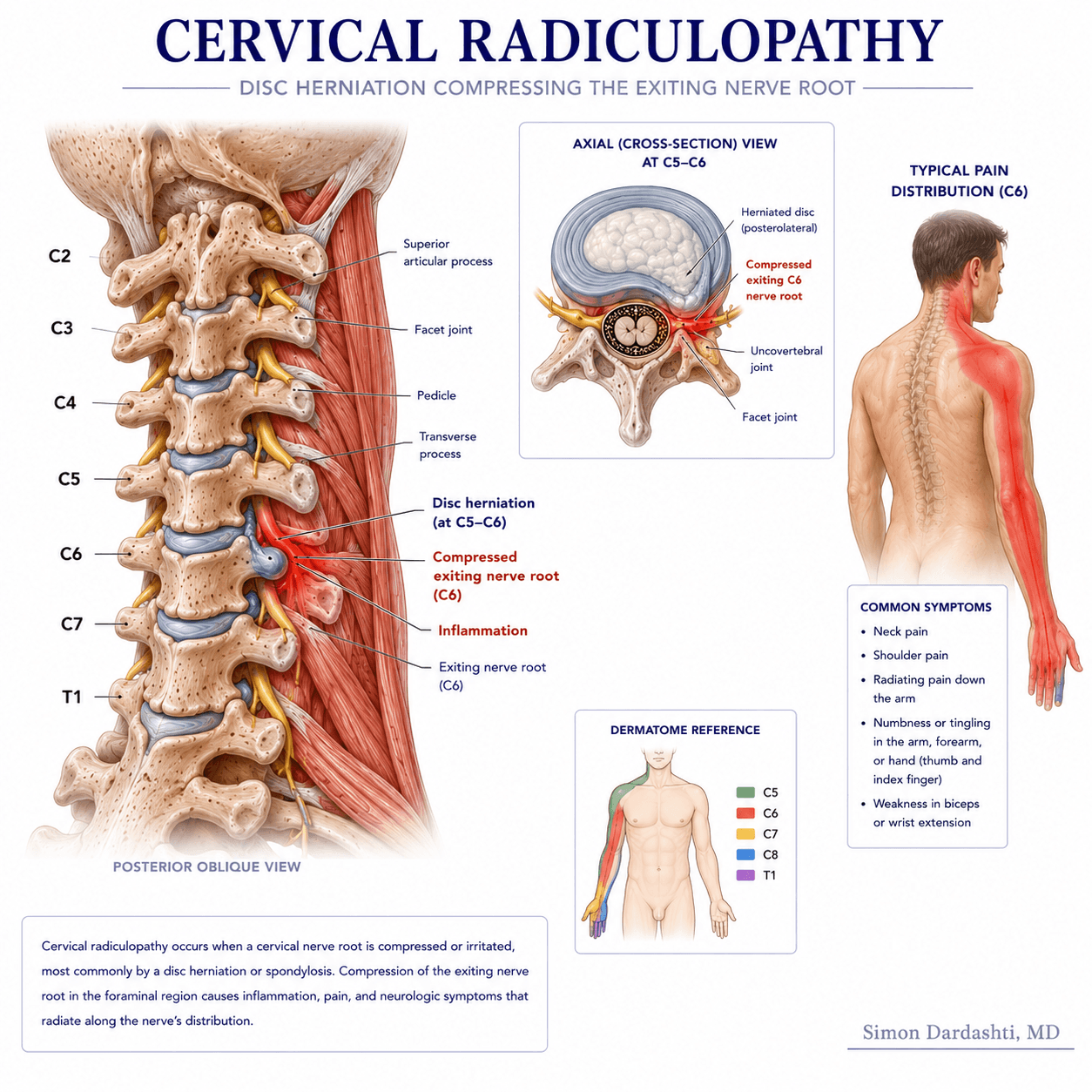
Cervical radiculopathy occurs when a nerve root in the neck is compressed or irritated, producing pain, numbness, or tingling that can radiate into the shoulder, arm, or hand.
Common Causes
Disc herniation and degenerative narrowing of the foramina are among the most common causes. Symptoms often follow a predictable pattern based on the nerve root level involved.
Not All Arm Pain Is Radiculopathy
Shoulder pathology, peripheral nerve conditions, and other sources can produce similar symptoms. An accurate evaluation is important to identify the correct diagnosis before treatment.
Overview
What Is Cervical Radiculopathy?
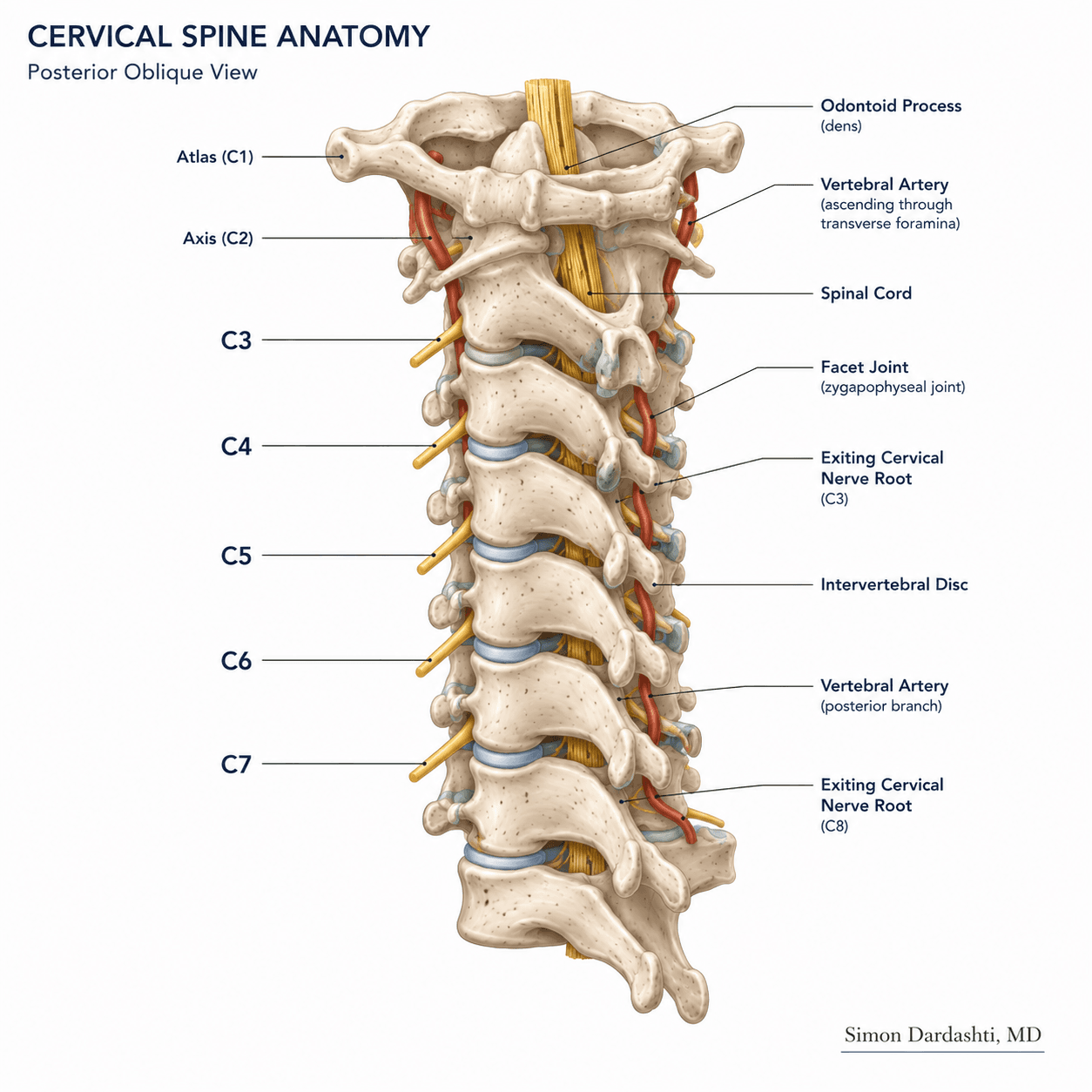
The cervical spine contains seven vertebrae, and nerve roots exit at each level through openings called foramina. When a cervical nerve root is compressed or irritated — typically by a herniated disc or degenerative narrowing — it can produce symptoms that travel along the path of that nerve into the upper extremity.
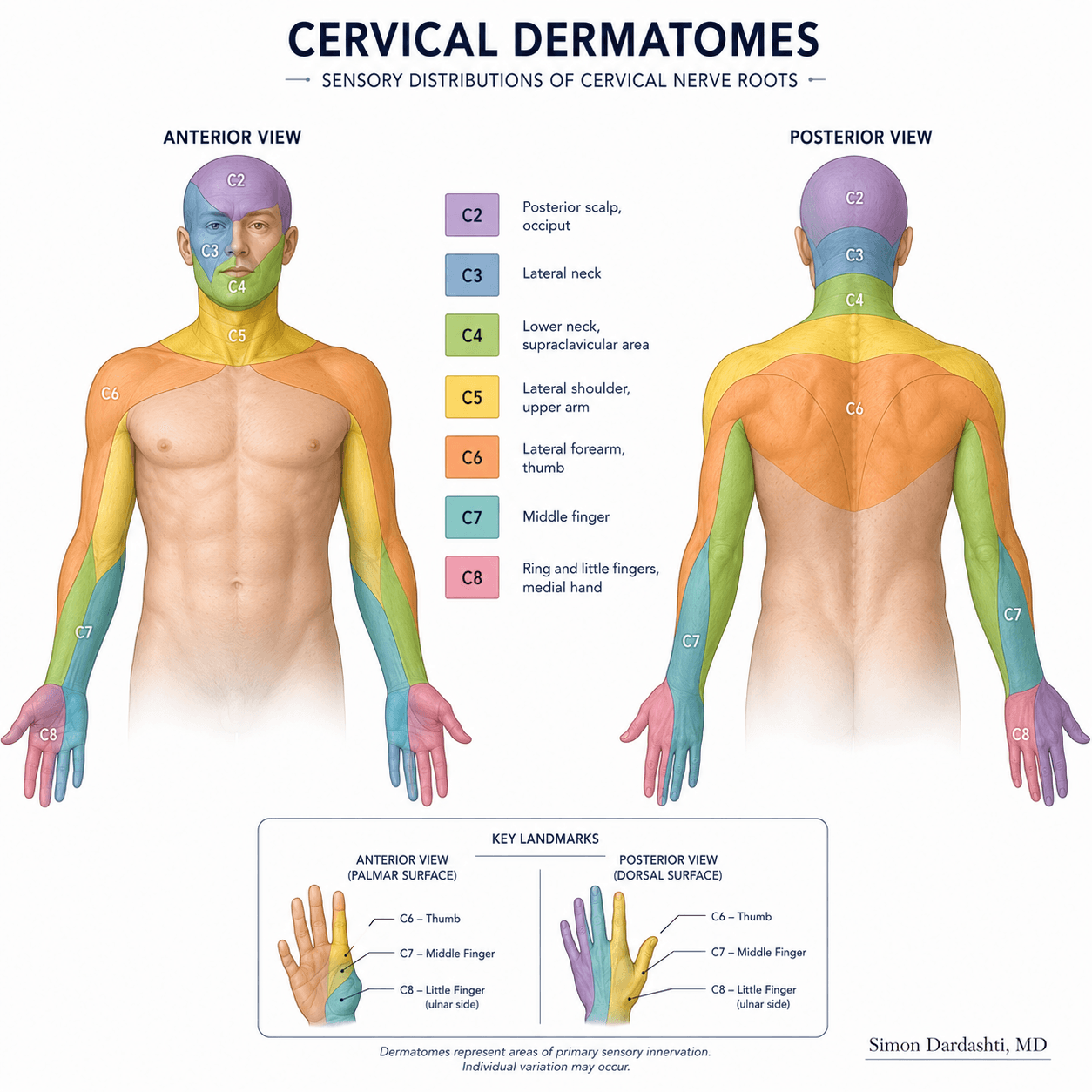
The level of the affected nerve root often determines the pattern of symptoms. For example, C6 nerve root involvement may produce symptoms into the thumb and index finger, while C7 involvement may produce symptoms into the middle finger. These dermatomal patterns help localize the level clinically and can be compared to imaging findings.
Cervical radiculopathy is distinct from cervical myelopathy, which involves compression of the spinal cord itself rather than individual nerve roots. Myelopathy typically causes different symptoms and often requires surgical evaluation. During the clinical evaluation, Dr. Dardashti assesses for signs that may suggest cord involvement.
Symptoms
Common Symptoms.
Symptoms associated with cervical radiculopathy may include:
- Neck pain that radiates into the shoulder, arm, forearm, or hand
- Numbness or tingling in the arm, forearm, or specific fingers
- Weakness in the arm, forearm, or hand muscles
- Pain that worsens with neck extension or rotation toward the affected side
- Pain that may improve with raising the arm overhead in some presentations
- Reduced reflexes in the affected arm
Approach
How Dr. Dardashti Evaluates Cervical Radiculopathy.
Evaluation includes a detailed history of symptom onset, distribution, character, and prior treatment response. The neurologic examination assesses upper extremity strength, sensation, and reflexes to identify patterns consistent with specific nerve root levels.
When cervical MRI or other imaging is available, findings — such as disc herniation or foraminal stenosis — are reviewed in relation to the patient's clinical presentation. An imaging abnormality does not by itself determine whether treatment is needed; the severity of symptoms, functional impact, and prior treatment history all inform the clinical decision.
The evaluation also includes an assessment for signs of cervical myelopathy, which would indicate a different clinical pathway. When myelopathy is suspected, surgical spine consultation is the appropriate next step rather than pain management procedures.
Treatment
Treatment Options That May Be Considered.
Treatment depends on the severity and duration of symptoms, neurologic findings, and prior treatment history. Options that may be considered include:
- Conservative care including physical therapy and activity modification
- Medication management when clinically appropriate
- Cervical epidural steroid injections — interlaminar or transforaminal — for selected patients with radicular symptoms
- Selective nerve root blocks for diagnostic or targeted therapeutic purposes
- Ongoing reassessment of neurologic status and symptom response
- Referral for surgical evaluation when conservative and interventional approaches have been insufficient or when neurologic status warrants
Not every patient with cervical radiculopathy requires an injection. Many cases improve with conservative management over time. Recommendations are based on individual clinical evaluation.
Limitations
Important Limitations.
Cervical radiculopathy can be caused by multiple factors, and treatment response varies. Not every patient improves with pain management procedures alone. The diagnosis and treatment plan depend on the full clinical picture, which requires a formal evaluation.
This page is for general informational purposes only and does not constitute medical advice or create a physician-patient relationship.
Dr. Dardashti sees patients in Mission Hills, California, serving patients from the San Fernando Valley, Santa Clarita Valley, and surrounding Los Angeles communities.
Related
Related Conditions & Procedures.
Medically Reviewed by Simon Dardashti, MD, MS·Board-Certified, Pain Medicine & Anesthesiology
Last Reviewed: July 2026