Procedures & Treatment Options
Cortisone & Steroid
Injections.
Cortisone and steroid injections are commonly used in pain management to reduce inflammation in a targeted area. Many patients have concerns about the word "steroid," but local steroid injections are different from taking oral steroids every day for weeks or months. A formal clinical evaluation is required to determine whether a steroid injection is appropriate for an individual patient.
In Brief
Local Treatment
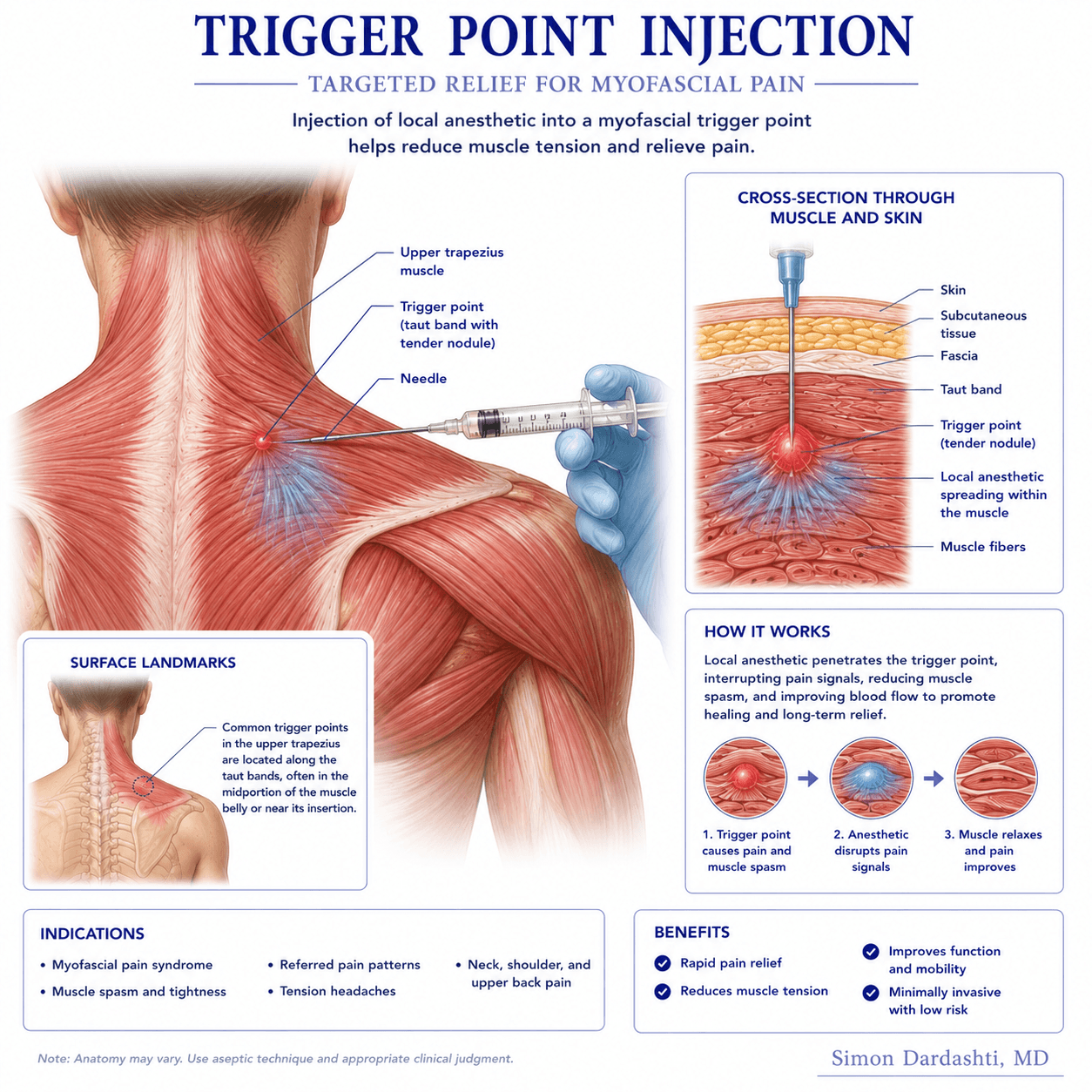
Steroid injections are usually placed near a specific painful or inflamed structure, such as a joint, bursa, tendon region, or irritated spinal nerve.
Bone Health
When used appropriately and in moderation, occasional steroid injections generally have minimal effect on overall bone strength.
Diabetes Precautions
Steroid injections can temporarily raise blood sugar, especially in patients with diabetes or prediabetes.
Overview
What Are Cortisone and Steroid Injections?
Cortisone is a type of corticosteroid medication. In pain management, corticosteroid injections may be used to reduce inflammation around painful structures such as joints, bursae, tendons, or spinal nerve roots.
These injections are different from anabolic steroids used for muscle-building and are also different from taking oral steroid medication for a long period of time. The purpose of a cortisone or steroid injection is to deliver anti-inflammatory medication to a specific area where inflammation may be contributing to pain.
Examples may include:
- Epidural steroid injections for selected patients with nerve-related neck, back, arm, or leg pain
- Facet joint injections when inflammation of the small joints of the spine may be contributing to pain
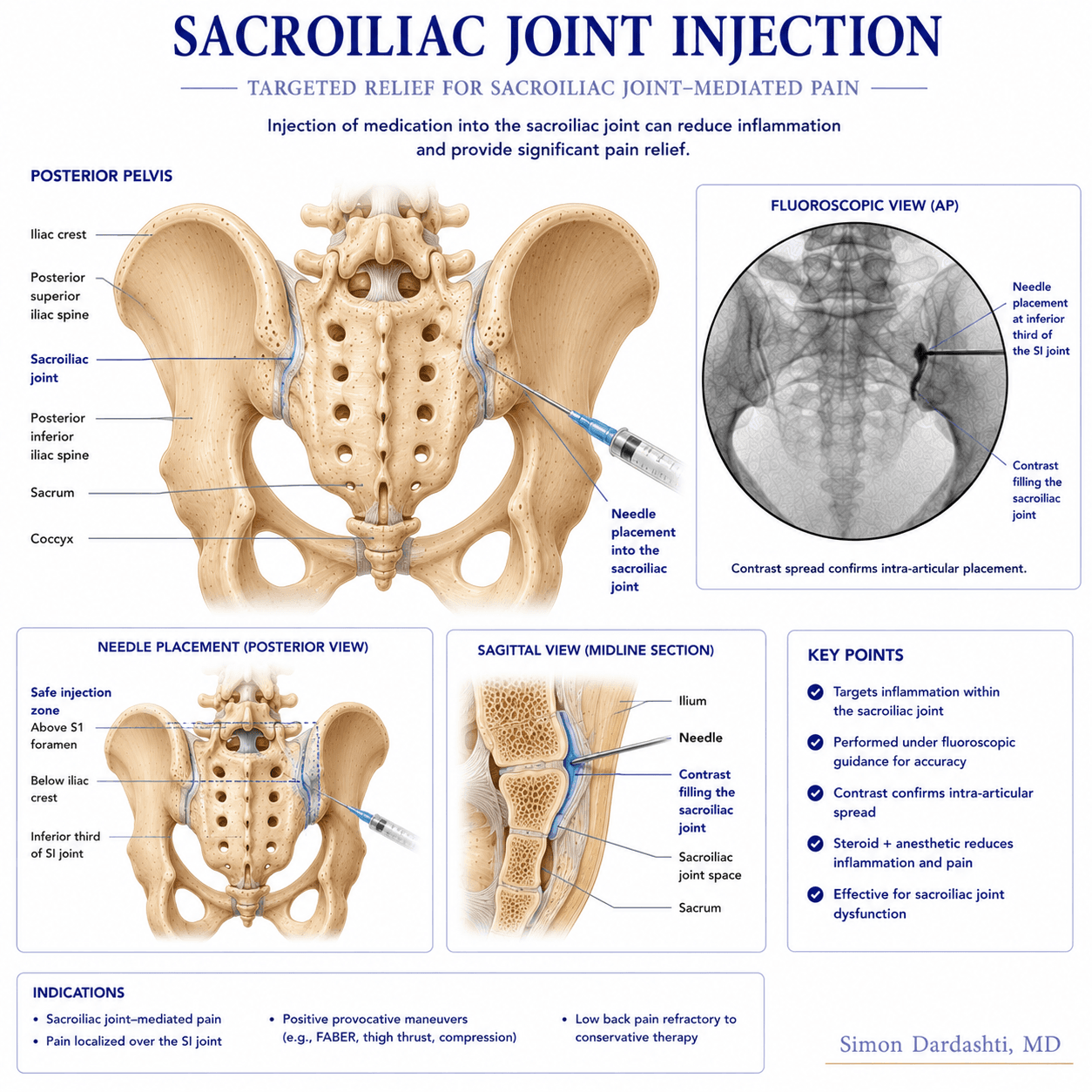
- Sacroiliac joint injections
- Joint injections
- Bursa injections
- Tendon sheath injections in selected situations
Not every pain condition requires a steroid injection. Treatment recommendations depend on the diagnosis, medical history, examination findings, imaging when available, prior treatment response, and patient-specific risks.
Bone Health
Do Steroid Injections Damage the Bones?
Many patients worry that a steroid injection will weaken their bones. This concern is understandable, because long-term oral steroid use can affect bone density.
However, a local steroid injection is not the same as taking steroid pills every day for weeks or months. With a properly used injection, the medication is placed into or near a specific area being treated. Most of the medication acts locally, and only a smaller amount may enter the rest of the body.
For that reason, occasional steroid injections used appropriately are much less likely to cause whole-body steroid effects such as generalized bone loss or osteoporosis.
This does not mean steroid injections should be used without limits. The risk of side effects may increase with larger doses, repeated injections, or injections performed too frequently in the same area. Depending on the location, repeated steroid exposure may raise concerns about cartilage, tendons, skin changes, or nearby tissues.
Dr. Dardashti considers the patient's overall clinical picture before recommending a steroid injection, including age, diagnosis, imaging findings, diabetes status, osteoporosis history, medication use, infection risk, and prior response to treatment.
Blood Sugar
Steroid Injections and Blood Sugar
Steroid injections can temporarily increase blood sugar levels. This is most important for patients with diabetes or prediabetes.
For many patients, the increase is temporary and may last for a few days. The amount and duration of the increase can vary from person to person.
Patients with diabetes should monitor their blood sugar more closely after a steroid injection. Patients who use insulin, have poorly controlled diabetes, or have had significant blood sugar changes after steroids in the past should plan ahead before the procedure.
If you have diabetes, you should coordinate with:
- Your primary care doctor managing your diabetes
- Your diabetes treating physician or endocrinologist, if applicable
- The physician performing the injection
This coordination is important so your blood sugar can be monitored safely and medication adjustments can be made if needed.
Context
How Steroid Injections Fit Into a Treatment Plan
Steroid injections are not intended to be the only treatment for most pain conditions. They are usually considered as part of a broader plan that may include physical therapy, home exercise, activity modification, weight management, medication review, imaging review, and other non-surgical options.
The goal is to reduce pain and inflammation enough to improve function, mobility, and participation in rehabilitation when appropriate.
Response varies. Some patients experience meaningful relief, some experience partial relief, and others may not respond. The duration of relief also varies depending on the condition being treated and the individual patient.
Risks
Risks and Limitations
As with any procedure, steroid injections have potential risks. These may include temporary soreness, temporary pain flare, bleeding, infection, allergic reaction, facial flushing, temporary blood sugar elevation, skin color changes, soft tissue changes, tendon weakening, cartilage-related concerns depending on the injection location, or lack of meaningful pain relief.
Serious complications are uncommon, but risk depends on the procedure type, injection location, medications, medical history, and individual patient factors.
A formal clinical evaluation is required to determine whether a steroid injection is appropriate. This page is for general informational purposes only and does not provide medical advice, diagnosis, or treatment.
FAQ
Frequently Asked Questions
Are cortisone injections the same as oral steroids?
No. A local cortisone or steroid injection is placed into or near a specific area. Oral steroids affect the whole body more broadly, especially when taken at higher doses or for longer periods.
Will one steroid injection cause osteoporosis?
Occasional steroid injections used appropriately are generally unlikely to cause generalized osteoporosis. The concern for bone loss is much greater with long-term oral or systemic steroid use.
Can steroid injections raise blood sugar?
Yes. Steroid injections can temporarily raise blood sugar, especially in patients with diabetes or prediabetes.
What should I do if I have diabetes?
Monitor your blood sugar more closely after the injection and coordinate with your primary care doctor managing diabetes, your diabetes treating physician or endocrinologist if applicable, and the physician performing the injection.
How often can steroid injections be repeated?
This depends on the diagnosis, injection location, dose, response to prior treatment, and patient-specific risks. Repeated injections should be used thoughtfully and not automatically repeated without reassessment.
Important
This page is for general informational purposes only and does not constitute medical advice or create a physician-patient relationship. All medical decisions should be made in consultation with a qualified healthcare provider following a thorough clinical evaluation.
Dr. Dardashti sees patients in Mission Hills, California, serving patients from the San Fernando Valley, Santa Clarita Valley, and surrounding Los Angeles communities.
Medically Reviewed by Simon Dardashti, MD, MS·Board-Certified, Pain Medicine & Anesthesiology
Last Reviewed: July 2026