Procedures & Treatment Options
Occipital
Nerve Blocks.
Occipital nerve blocks are used to address pain in the occipital nerve distribution, including occipital neuralgia and certain headache conditions. A formal clinical evaluation is needed to determine whether an occipital nerve block is appropriate for any individual patient.
In Brief
What it is
An injection of anesthetic medication around the occipital nerves at the base of the skull, used to address pain in the back of the head and neck, including occipital neuralgia.
When it may be considered
In selected patients with occipital neuralgia, headache involving the occipital nerve distribution, or neck pain originating from the occipital nerve when other approaches have been tried.
What to expect
The occipital nerve is located by palpation at the base of the skull, and anesthetic medication is injected. The procedure typically takes 10-15 minutes. Patients are observed briefly and usually go home the same day.
Anatomy
The Occipital Nerves.
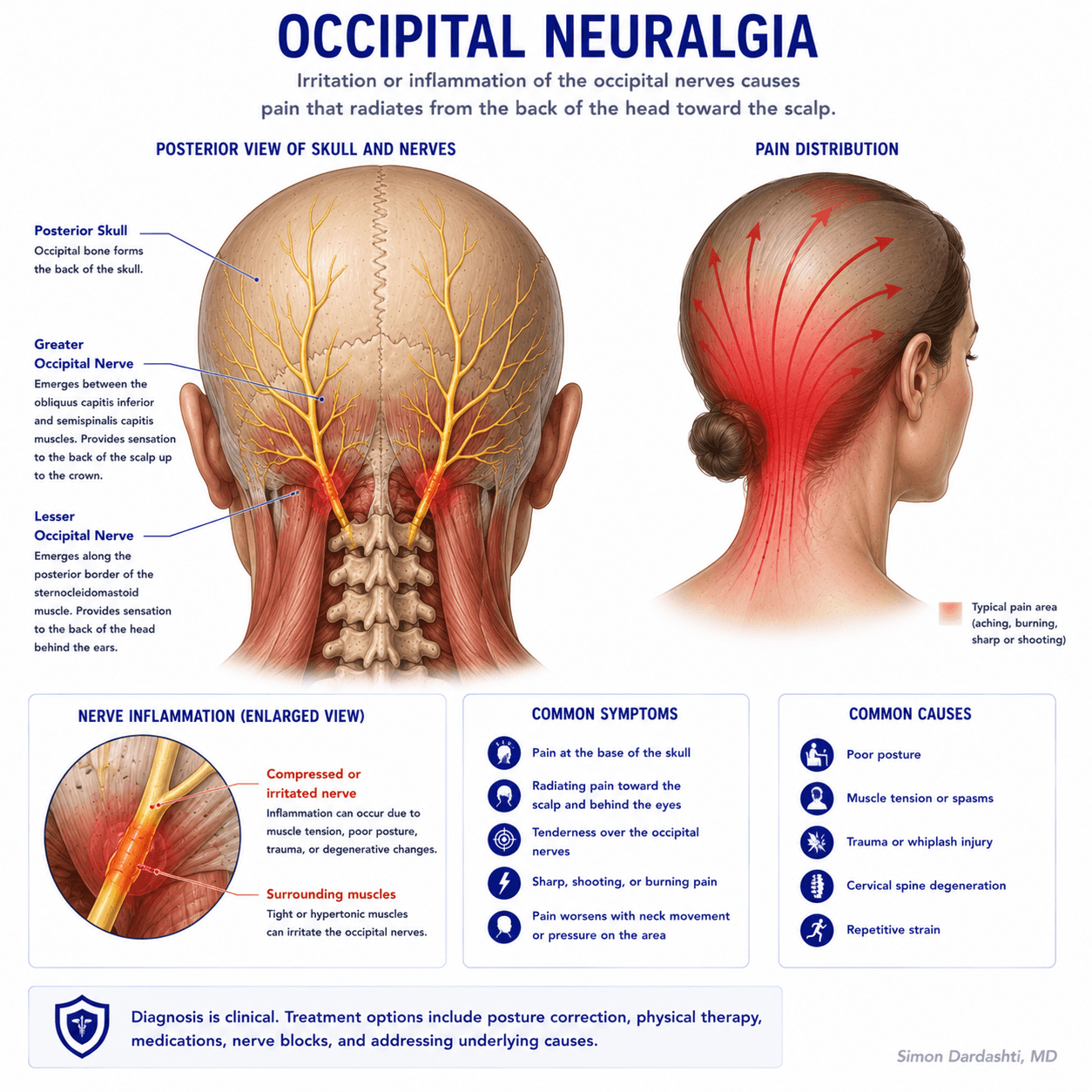
The occipital nerves are sensory nerves that arise from the upper cervical spine (C1, C2, and C3 nerve roots). They travel upward along the back of the neck and supply sensation to the back of the scalp and upper neck area.
The greater occipital nerve and lesser occipital nerve are the primary occipital nerves. When these nerves become irritated or inflamed, they can cause pain in the back of the head and neck. This pain condition is called occipital neuralgia.
Indications
When Occipital Nerve Blocks May Be Considered.
Occipital nerve blocks may be considered for selected patients with:
- Occipital neuralgia
- Pain in the occipital nerve distribution (back of the head and neck)
- Cervicogenic headache
- Other headache conditions where the occipital nerve may be involved
- Pain that has not responded adequately to conservative treatment
Whether an occipital nerve block is appropriate depends on the patient's diagnosis, location of pain, prior treatment response, and overall clinical context.
Procedure
The Occipital Nerve Block Procedure.
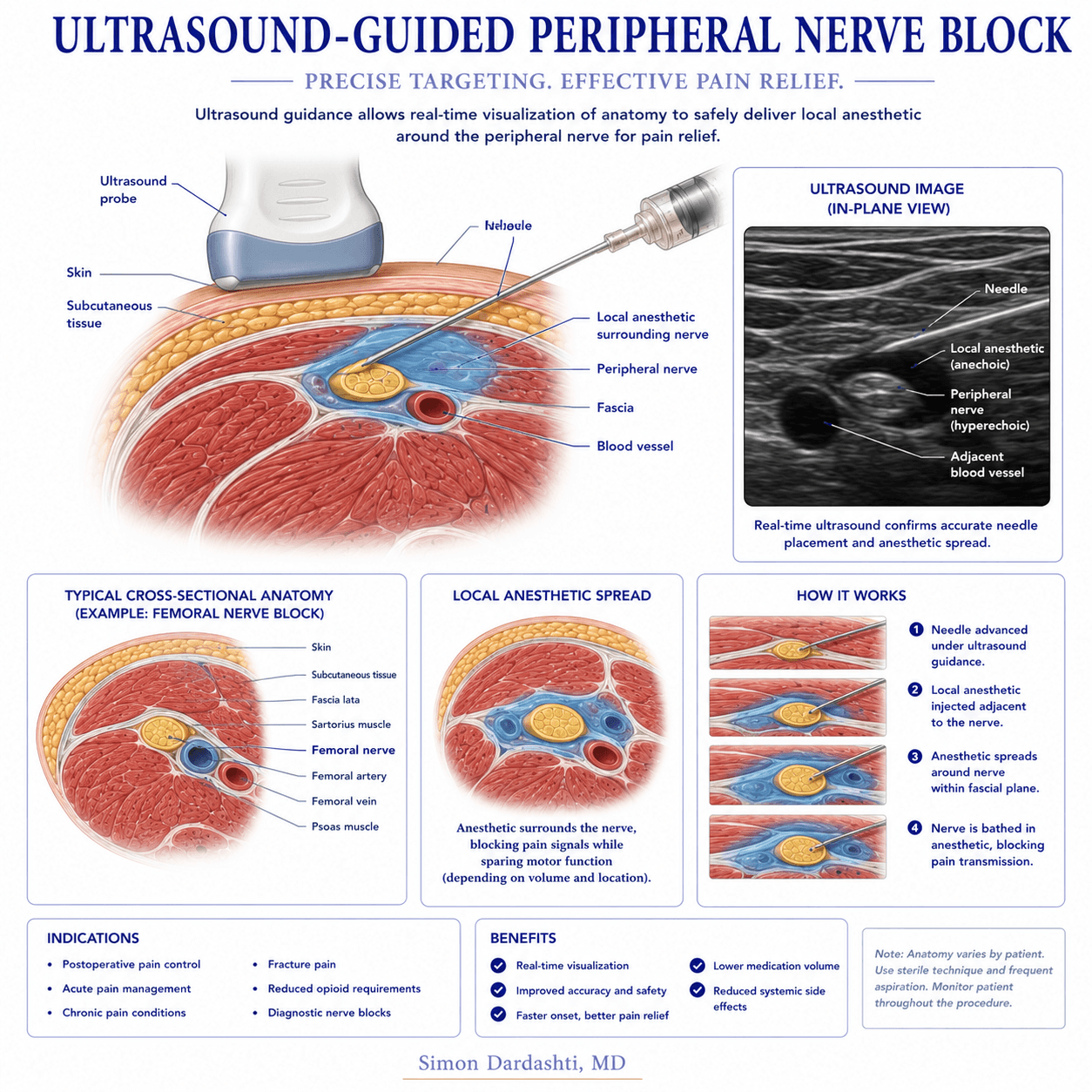
The patient sits or lies in a comfortable position. The physician identifies the occipital nerves by palpating anatomical landmarks at the base of the skull where the greater and lesser occipital nerves emerge. Ultrasound guidance may also be used to improve accuracy.
Once the nerves are located, local anesthetic is injected around the occipital nerves. The procedure typically takes 10-15 minutes. Most patients experience some degree of numbness or tingling in the back of the head after the block, which gradually resolves as the anesthetic wears off. Patients are observed briefly and usually go home the same day.
Outcomes
Relief Duration and Repeat Treatments.
The duration of pain relief from an occipital nerve block varies significantly. Some patients experience relief lasting weeks or months, while others have shorter-lived relief. The duration depends on the underlying cause of the occipital nerve irritation and individual patient factors.
If the initial block provides relief, repeat blocks can typically be performed when pain returns. Some patients benefit from a series of blocks spaced over time. The frequency and number of blocks recommended depends on response and clinical assessment.
Questions
Frequently Asked Questions.
What is occipital neuralgia?
Occipital neuralgia is a condition causing pain in the distribution of one or both occipital nerves — the nerves that supply the back of the scalp and upper neck. The pain is typically described as sharp, shooting, or electric. The occipital nerves arise from the upper cervical spine.
How is the occipital nerve identified?
The occipital nerves are located at the base of the skull, just above where the neck meets the head. They are identified by palpation (feeling) of specific anatomical landmarks. The injection is typically performed based on anatomical landmarks, though ultrasound guidance may also be used.
How long does the pain relief last?
Response duration varies significantly between patients. Some patients experience relief for weeks or even longer, while others have shorter-lived relief. The duration of benefit depends on the underlying condition, individual factors, and the specific diagnosis.
Can this block be repeated?
Yes, occipital nerve blocks can typically be repeated if they provide relief but the pain returns. The frequency of blocks is determined based on clinical response, the underlying condition, and treatment goals.
Is this procedure permanent?
No, occipital nerve blocks provide temporary relief by blocking pain signals. They do not permanently cure the underlying condition causing the pain. Some patients may benefit from repeated blocks; others may benefit from other treatments.
Are there risks or side effects?
Like all injections, occipital nerve blocks carry potential risks including temporary pain, bruising, bleeding, infection, or allergic reaction. Side effects may include temporary numbness in the back of the head or neck. Serious complications are rare when performed by experienced physicians.
Information
Important Information.
Occipital nerve blocks provide temporary relief from pain and do not cure the underlying condition. Response is variable and depends on the cause of the occipital nerve irritation, severity and duration of symptoms, and individual patient factors. These blocks are not guaranteed to provide pain relief.
A formal clinical evaluation is required to determine whether an occipital nerve block is an appropriate option for any individual patient. This page is for general informational purposes only and does not constitute medical advice or create a physician-patient relationship.
Dr. Dardashti sees patients in Mission Hills, California, serving patients from the San Fernando Valley, Santa Clarita Valley, and surrounding Los Angeles communities.
Related
Medically Reviewed by Simon Dardashti, MD, MS·Board-Certified, Pain Medicine & Anesthesiology
Last Reviewed: July 2026